The Complete Barber Guide: Haircuts, Fades & Barber Tips 2026
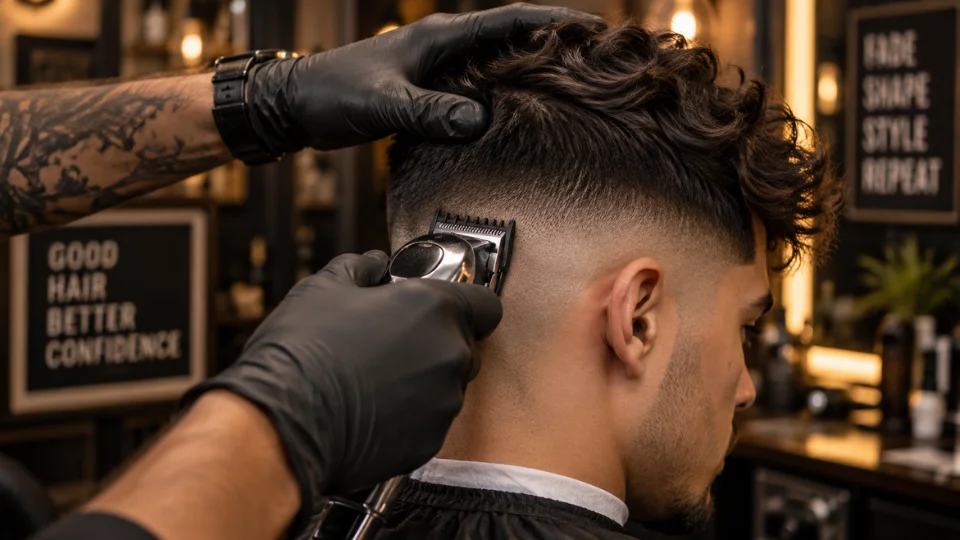
Walking into a barbershop can feel intimidating if you do not know the lingo. You sit down, the barber asks what you want, and you end up pointing at your phone hoping the photo speaks for itself. This barber guide fixes that.
By the end, you will understand what barbers actually do, the tools they use, how to describe the cut you want, what a fair price looks like, and how to keep your haircut looking sharp long after you leave the chair. Consider this your one-stop reference for everything barbering related on BurstFadeBlog.
Quick Answer
A barber is a licensed grooming professional trained in men’s haircuts, fades, and shaves. A good barber guide covers barber terminology, tools like clippers and guards, how to pick a fade or hairstyle based on your face shape and hair type, what a haircut should cost, and how to talk to your barber so you leave the chair happy every time.
What Is a Barber, Exactly? (And How They’re Different From Hairstylists)?
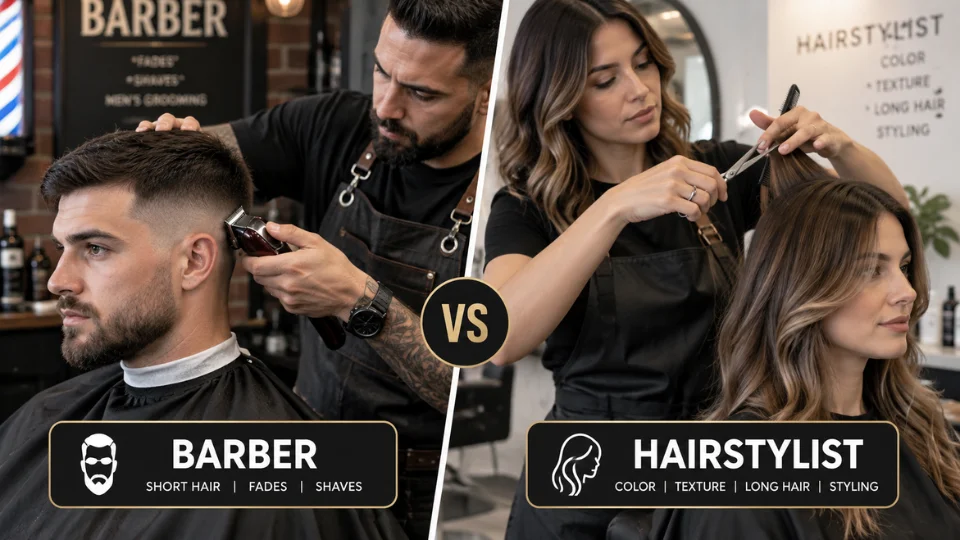
Any solid barber guide starts with a clear answer to this question.A barber is a licensed professional trained specifically in men’s grooming. That includes haircutting, beard trims, straight razor shaves, and short hair techniques like fades and line-ups. Barbers train through a barber-specific program and pass a state licensing exam before they can legally work in a shop.
Hairstylists usually train in cosmetology school instead. Their programs cover a broader range of services such as coloring, chemical treatments, and longer hair styling. Many stylists can cut short men’s hair well, but fading and precision clipper work are a barber’s specialty.
Barber vs. Hairstylist: Key Differences
- Training focus: Barbers specialize in short hair, fades, and shaves. Stylists train broadly across color, texture, and length.
- Tools: Barbers rely heavily on clippers, trimmers, and straight razors. Stylists use these tools less often.
- Setting: Barbershops tend to be walk-in friendly with a faster pace. Salons often run on longer appointments.
- Typical client: Barbers mostly serve men and boys with short to medium hair. Stylists serve a wider range of hair lengths and genders.
What Training and Licensing a Barber Actually Has
Most states require barbers to complete 1,000 to 1,500 hours of supervised training before sitting for a licensing exam. That training covers sanitation, scalp health, razor safety, and cutting technique, and licenses must be renewed periodically. If you want to verify a barber’s credentials, your state’s barber board website usually has a public license lookup tool.
A Brief History of Barbering
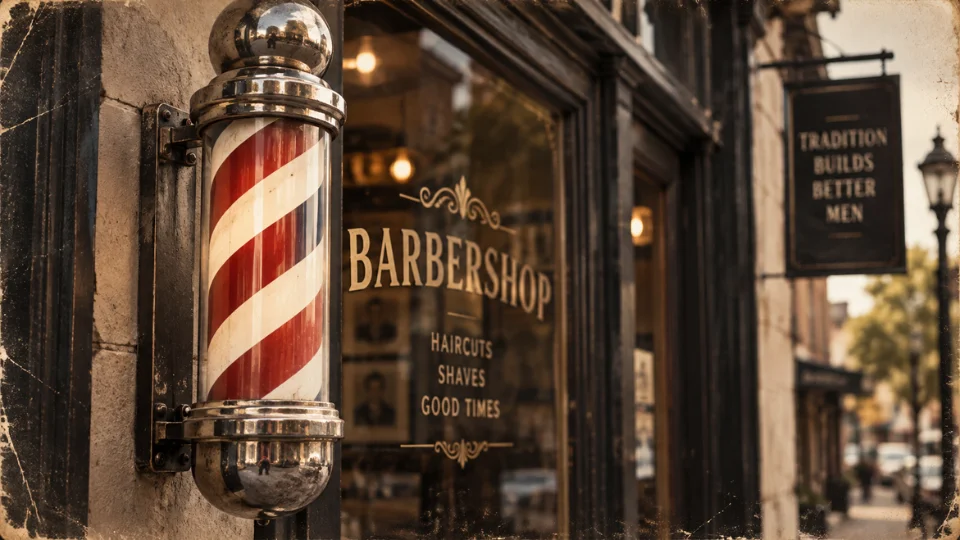
No barber guide is complete without a little history. Barbering is one of the oldest trades in the world. Ancient Egyptian barbers used bronze razors as far back as 3000 BC, and the trade grew into a respected profession across Greece and Rome, where a sharp haircut signaled status.
During the medieval period, barbers took on a strange second job. Barber-surgeons performed haircuts, shaves, and minor surgery in the same shop, which is actually why the classic barber pole is striped red and white. The red represented blood, and the white represented bandages.
By the 1900s, barbering split from surgery for good and became the grooming-focused trade we recognize today. Modern barbershops have gone through their own revival over the past two decades, with renewed focus on skin fades, sharp line-ups, and barbershops as community spaces. That history explains why barbering has always been treated as a specialized skill, separate from general hairstyling.
Barber Terminology 101: Quick Reference Glossary
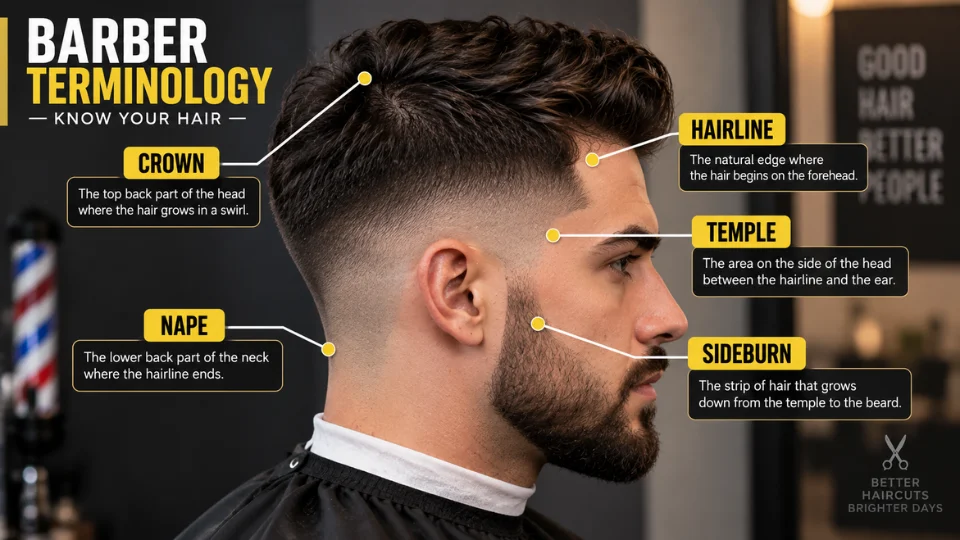
Knowing a few key terms turns a confusing conversation into a confident one.This part of the barber guide covers the words you will hear most often in the chair. Here is a fast glossary of the words you will hear most often in the chair. A full A to Z reference is included later in this guide for anything not covered here.
Cutting & Fading Terms
- Taper: Hair that gradually shortens toward the neckline, without necessarily reaching the skin.
- Fade: A more dramatic version of a taper where the hair blends down to very short length or bare skin.
- Blending: Smoothing the transition between two lengths so there is no visible line.
- Skin fade: A fade that goes all the way down to bare skin, also called a bald fade.
Tool & Technique Terms
- Clipper-over-comb: Running clippers over a comb held against the hair to control length by hand rather than with a guard.
- Line-up (edge-up): Sharpening the hairline, sideburns, and neckline with a trimmer or razor for a crisp finish.
- Guard numbers: The plastic attachments on clippers that control how much hair is left. Lower numbers cut shorter.
Styling & Finishing Terms
- Texturizing: Using thinning shears or a razor to remove bulk and add movement to the top hair.
- Point cutting: Cutting hair at an angle into the ends to create softer, less blunt texture.
- Razor work: Using a straight razor for detailed work like hairline cleanup or a full shave.
The Complete Barber Tools Guide
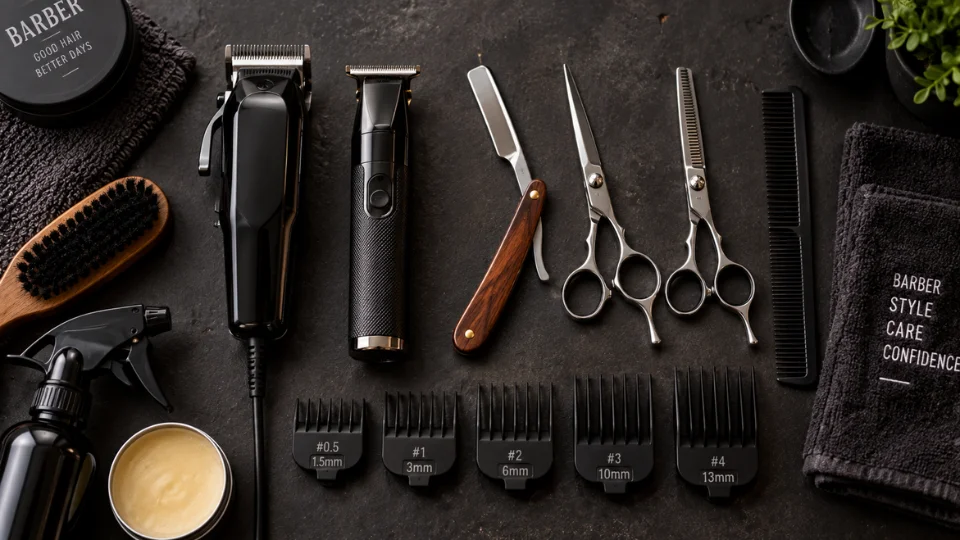
No barber guide would be complete without a full breakdown of the tools involved.Understanding the tools helps you follow along during your appointment and even ask better questions.
Clippers & Trimmers
Clippers handle the bulk of the cutting, especially for fades and short styles. Trimmers are smaller and more precise, used for detail work like the hairline, sideburns, and neckline. A good barber usually switches between several clipper sizes throughout a single haircut. For a deeper breakdown of specific tools and recommendations, see our barber tools guide.
Guards/Combs and What the Numbers Mean
Guard numbers translate directly to hair length. Here is a quick reference table.
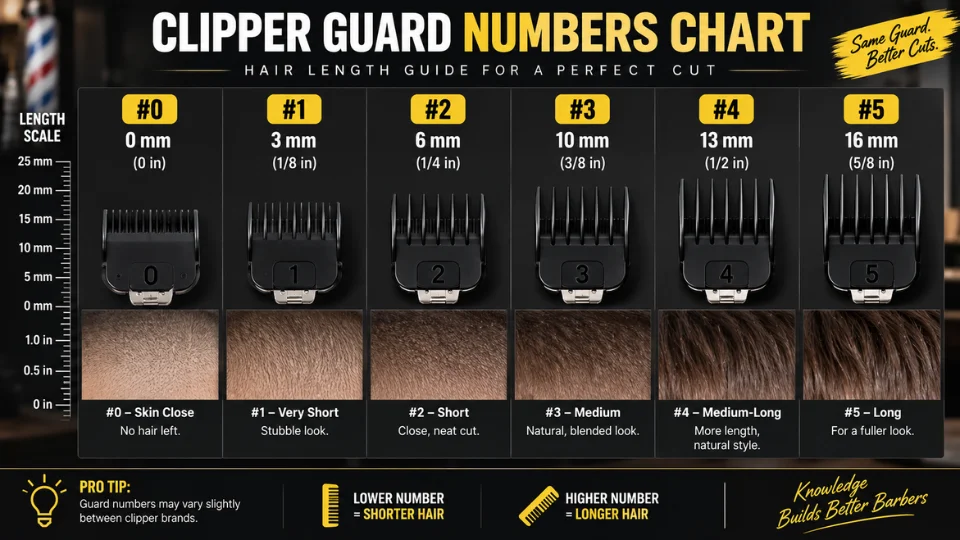
| Guard Number | Approximate Length |
| #0 (no guard) | Skin level, closest possible cut |
| #1 | 1/8 inch (about 3mm) |
| #2 | 1/4 inch (about 6mm) |
| #3 | 3/8 inch (about 10mm) |
| #4 | 1/2 inch (about 13mm) |
| #5 | 5/8 inch (about 16mm) |
Pro tip: If you liked a previous haircut, ask your barber which guard they used on top and on the sides. Writing that number down means your next barber can match it exactly, even at a different shop.
Shears, Razors & Texturizing Tools
Shears handle length and shape on longer hair, while thinning shears remove weight without shortening length. A straight razor handles line-ups, detail edges, and traditional wet shaves.
Sanitation Tools Barbers Rely On
Barbicide jars, UV sanitizers, and single-use neck strips are standard in a professional shop, and a clean, organized station is one of the easiest ways to judge a barbershop’s overall standards before your first cut.
Finishing Products Used In-Chair
Most barbers finish with a small amount of pomade, matte clay, or styling wax depending on the style. If you have a preferred hair product, mention it during your consultation so the barber styles the cut the way you will actually wear it at home.
Barbershop Hygiene & Sanitation: What to Expect
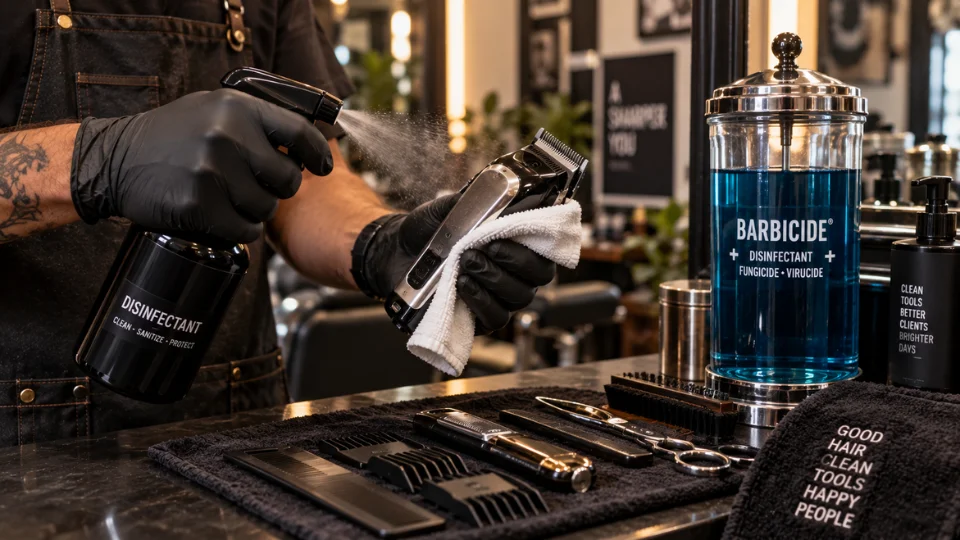
This barber guide would not be complete without covering hygiene, since it is not just a nice-to-have in a barbershop. It is a health and safety requirement, and a shop that takes it seriously is a shop worth trusting with your hair and skin.
How Barbers Sanitize Tools Between Clients
Licensed barbers disinfect clippers, shears, and razors between every client, typically using an EPA-registered disinfectant or barbicide solution. Clipper blades get wiped and sprayed, combs are either single-use or soaked in disinfectant, and towels should be fresh for each client rather than reused.
Signs a Barbershop Takes Hygiene Seriously
- Visible disinfectant jars or UV sanitizing cabinets at each station
- Fresh neck strips and clean capes for every client
- Tools wiped down in front of you between uses
- A generally tidy, organized station rather than clutter and loose hair
Why This Matters for Your Health
Unsanitized tools can spread skin infections, folliculitis, and in rare cases more serious bloodborne conditions if a nick occurs with a shared razor. According to the CDC, proper disinfection of personal care tools significantly reduces infection risk. If a shop does not visibly clean tools between clients, ask about their process or choose a different barber.
Understanding Your Hair Type Before You Choose a Style
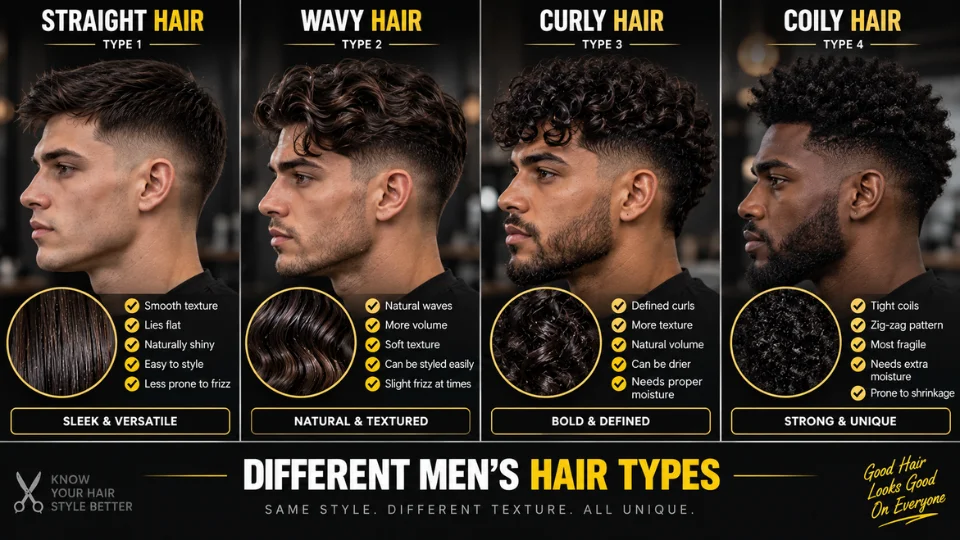
Not every haircut works the same way on every head, and this barber guide would not be complete without covering it. Hair type changes how a style looks, how it grows out, and how much maintenance it needs. For a full breakdown, see our hair type guide.
Straight, Wavy, Curly & Coily Hair, What Each Needs
- Straight hair: Shows sharp lines clearly, which makes clean fades and part-based styles look crisp.
- Wavy hair: Adds natural texture and movement, works well with textured crops and quiffs.
- Curly hair: Needs a barber experienced in cutting curl by curl, since curls shrink once cut and can shift a fade’s appearance.
- Coily hair: Holds shape well for sharp designs and line-ups but needs specific moisture care to prevent dryness.
Hair Density & Texture Explained
Density refers to how much hair you have per square inch of scalp, while texture refers to the thickness of each individual strand. Thick, dense hair can hide a fade line more easily, while fine, thin hair shows every detail, which is why barbers often adjust technique based on both factors rather than length alone.
How Hair Type Affects Fade Difficulty and Upkeep
Curly and coily hair types often need more frequent touch-ups to keep a fade sharp, since new growth shows more quickly against a short fade line. Our curly hair burst fade guide breaks down what to expect, while straight hair types tend to hold a clean fade line a bit longer, covered in our straight hair burst fade guide.
Common Hair Problems & Barber Solutions
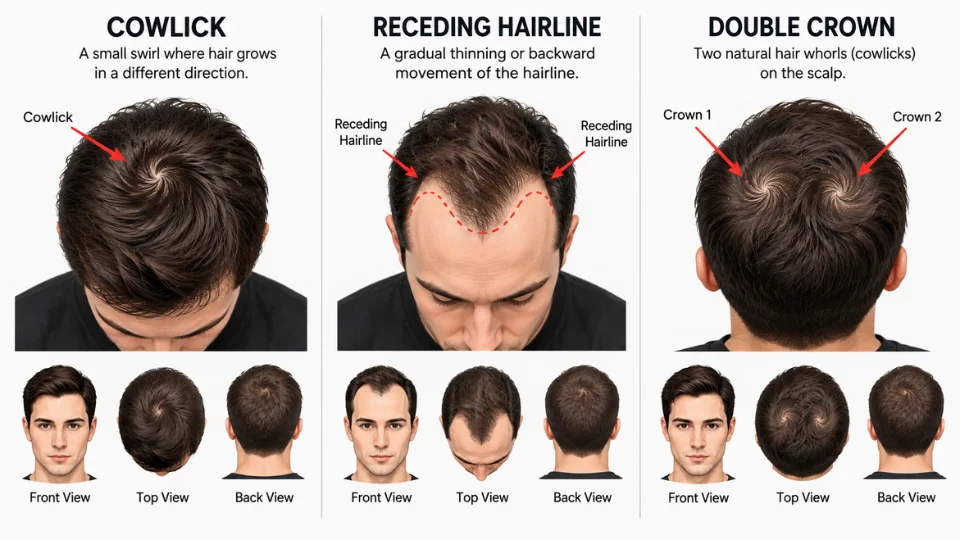
Most heads of hair come with at least one quirk, and no barber guide would be complete without practical fixes for the most common ones.
Cowlicks
A cowlick is a spot where hair grows in a circular or upward pattern, often at the crown or front hairline. Rather than fighting it with length, barbers often cut with the cowlick’s natural direction or leave slightly more length around it so it lies flat instead of sticking up.
Thinning Hair
For thinning hair, barbers often recommend shorter overall length, since longer hair can emphasize gaps. A slightly shorter fade with texture on top can create the appearance of fuller density.
Receding Hairline
A receding hairline does not have to limit your options. Barbers often shape the hairline to follow its natural recession rather than fighting it with a hard, straight line, which tends to look more natural as the hairline continues to change over time.
Double Crowns and Unusual Growth Patterns
A double crown means hair grows in two separate circular patterns instead of one, which can cause hair to stick up or split unpredictably at the back. Barbers usually manage this with slightly longer length at the crown, working with the growth pattern instead of against it.
Finding Your Face Shape (So Your Barber Can Actually Use It)
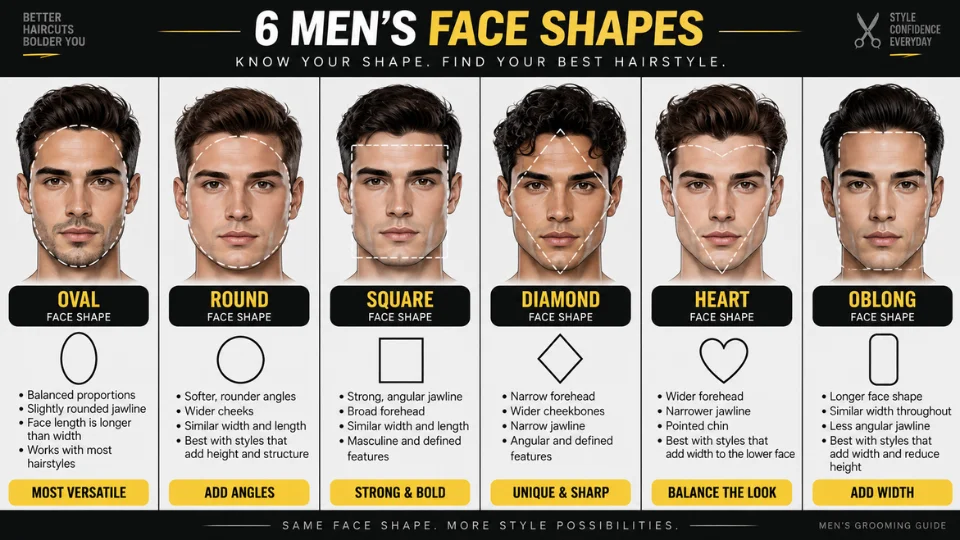
Face shape is not the only factor in choosing a haircut, but it does help a barber suggest a style that balances your features. For a deeper look, see our face shape guide.
The 6 Common Face Shapes Explained
- Oval: Balanced proportions, most styles work well.
- Round: Fuller cheeks, benefits from added height on top.
- Square: Strong jawline, works well with textured tops and softer sides.
- Diamond: Narrow forehead and chin with wider cheekbones, benefits from styles with volume at the forehead.
- Heart: Wider forehead, narrower chin, balanced by fuller sides or a fringe.
- Oblong: Longer face shape, benefits from styles that add width rather than height.
Quick At-Home Face Shape Test
Stand in front of a mirror and trace your reflection’s outline on the glass with a dry-erase marker, or take a straight-on photo and trace it digitally. Compare the outline to the shapes above. Most people are a blend of two shapes rather than a perfect match, and that is completely normal.
Best General Style Directions Per Face Shape
As a general rule, rounder faces benefit from more height and shorter sides, while longer faces benefit from more width and fuller tops. A skilled barber will adjust these guidelines based on your hair type and personal preference, so treat face shape as a starting point for the conversation, not a strict rule.
Understanding Fades & Tapers: The Backbone of Modern Barbering
Fades and tapers are the foundation of most modern men’s haircuts, and this section of the barber guide will change how you talk to your barber forever.
Low, Mid & High Fade Explained
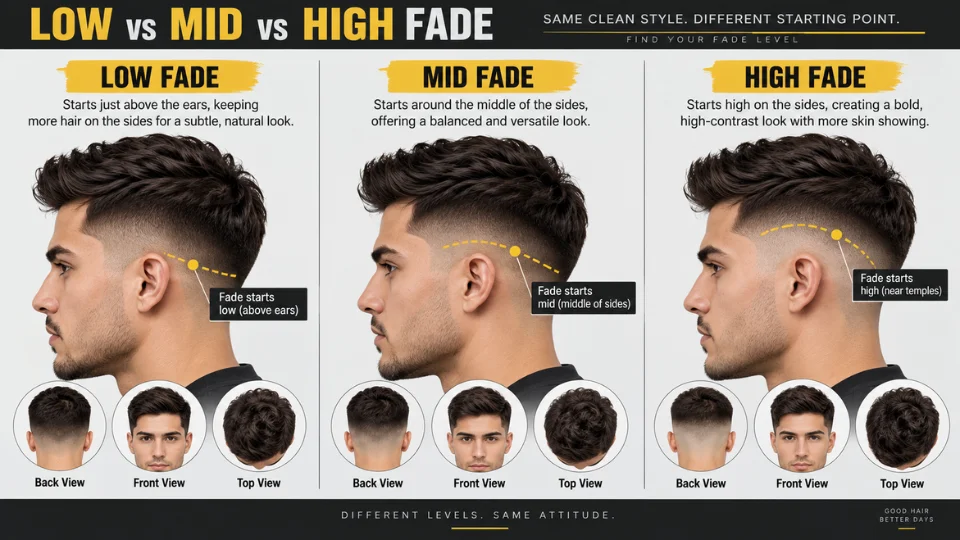
The difference between a low fade, mid fade, and high fade comes down to where the fading begins on the head.
| Fade Type | Starting Point | Best For |
| Low Fade | Just above the ears, close to the neckline | Subtle, workplace-friendly looks |
| Mid Fade | Mid-way up the sides, around temple level | Balanced, versatile styling |
| High Fade | High on the sides, closer to the top | Bold, high-contrast styles |
Taper Fade vs. Skin Fade vs. Burst Fade
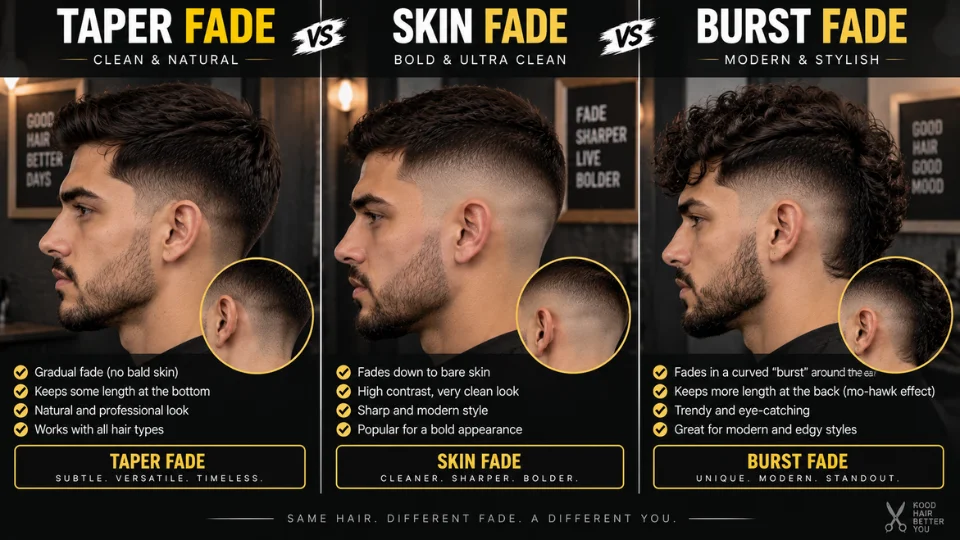
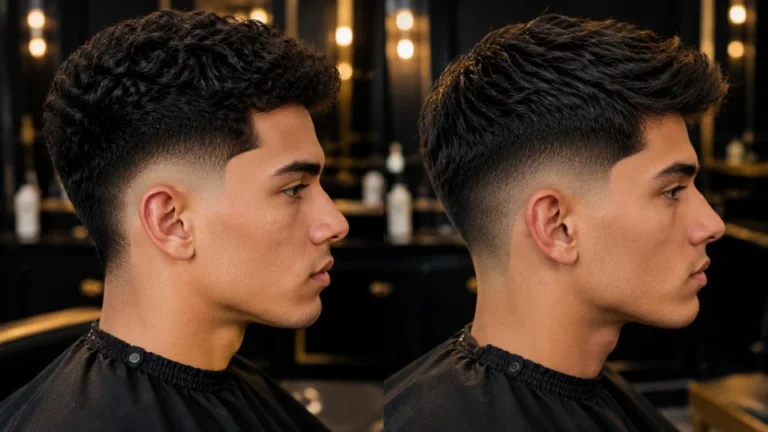
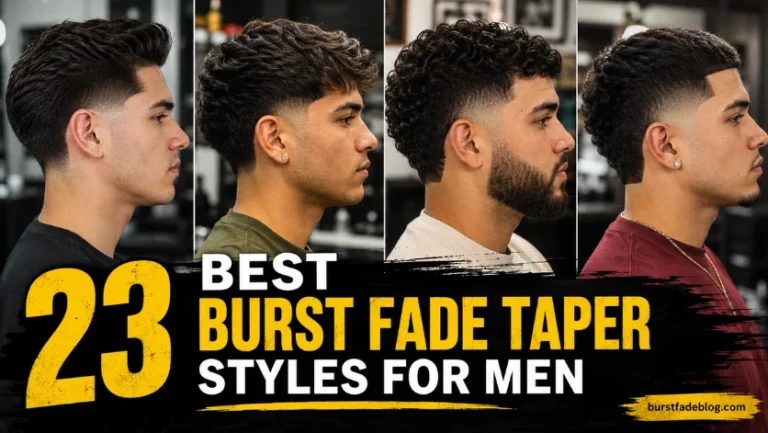
A taper fade blends gradually without necessarily reaching bare skin. A skin fade blends all the way down to the scalp for maximum contrast. A burst fade curves around the ear in a half-circle instead of a straight line, creating a rounded shape.
Drop Fade, Temp Fade & Other Fade Variations
A drop fade curves downward behind the ear for a more dramatic line. See our burst fade vs. drop fade comparison if you are deciding between the two. A temp fade is a subtle fade focused only around the temples, popular for clients who want lower maintenance between full touch-ups.
Which Fade Suits Which Hair Type and Face Shape
Skin fades show off sharp, clean lines and work especially well with straight or wavy hair. Burst fades pair nicely with rounder face shapes since the curved line around the ear softens sharp angles. If you are still deciding, our full burst fade versus taper fade breakdown walks through the pros and cons of each side by side.
Common mistake to avoid: Asking for “a fade” without specifying low, mid, or high leaves too much room for interpretation. Always pair the fade type with a starting height for the most accurate result.
Popular Men’s Haircuts Explained (Beyond the Fade)
Fades are not the only option, and this barber guide covers the other popular styles you will hear about at the shop.
Classic Cuts
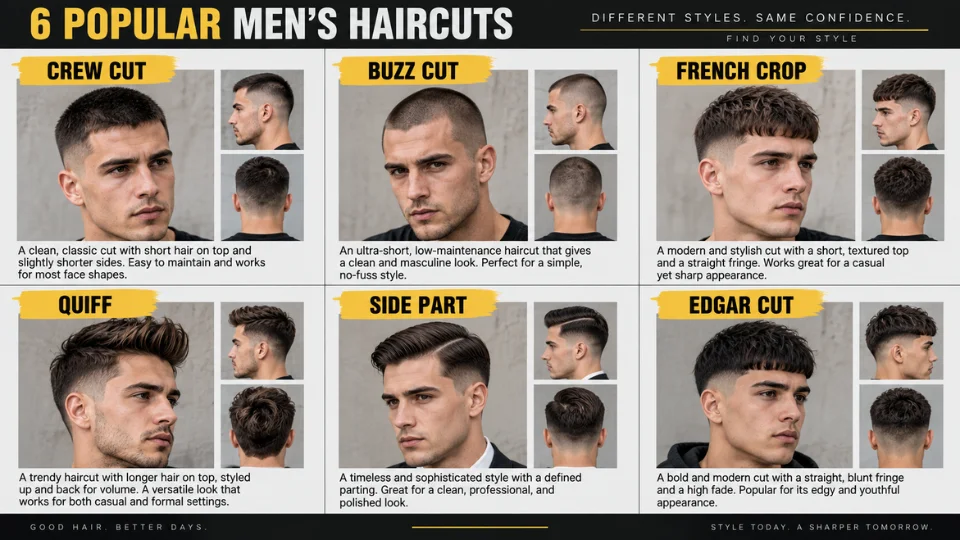
The crew cut and buzz cut are low-maintenance styles built on short, uniform length. A buzz cut skips top length entirely, while a crew cut leaves a bit more on top for styling. A Caesar cut keeps the top short with a horizontal fringe for a clean, no-fuss look.
Textured & Modern Cuts
The French crop pairs short sides with a textured, slightly longer top and a straight fringe. A textured crop uses point cutting to add movement. A quiff builds height at the front with product and works well for wavy or thick hair.
Part-Based Styles
A side part uses a defined line for a classic, polished look. A hard part cuts that line into the hair with a razor for extra sharpness, often paired with a fade underneath. A comb over sweeps longer top hair over shorter sides, usually finished with a fade for contrast.
Statement Cuts
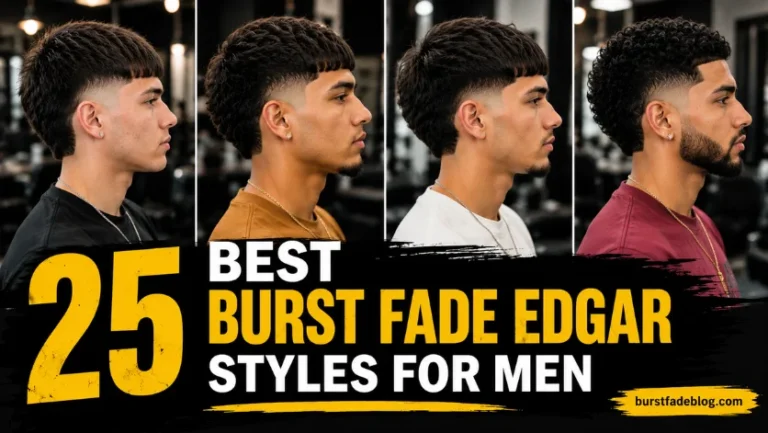
An Edgar cut features a straight, blunt fringe with sharp sides, often finished with a burst or skin fade. A mohawk fade keeps a strip of longer hair down the center while fading the sides completely, and our burst fade mohawk guide covers how to keep that strip sharp. A faux hawk gives a softer, everyday version of the same idea without shaving the sides as close.
How to Choose the Right Barber
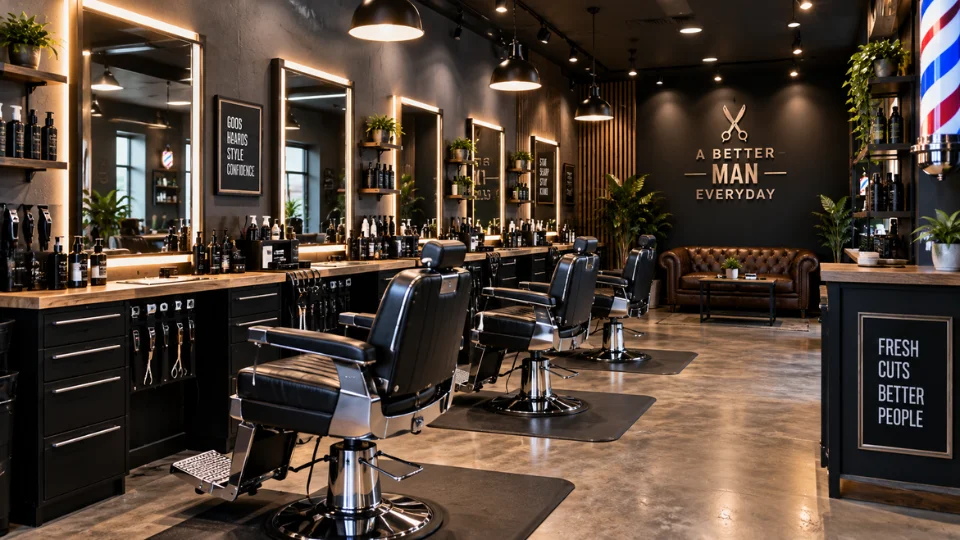
Picking the right barber matters just as much as picking the right style, which is why this barber guide dedicates a full section to it.
What to Look For in a Barbershop
Look for clean tools, organized stations, and a barber who asks thoughtful questions during a first consultation. Reviews that specifically mention fades or your hair type are a good sign if that is the style you are after.
Questions to Ask Before Booking
Ask whether the barber has experience with your hair type, how they handle a botched line if something goes wrong, and their appointment versus walk-in policy.
Warning Signs of a Bad Barber
Rushing the consultation, refusing to confirm guard numbers, unsanitized tools, or dismissing your hair type concerns are all signs to try a different shop.
How to Find a Good Barber Near You
Start with local search and filter reviews for mentions of fades, curly hair, or whatever style you are after, since a shop’s overall rating does not always reflect skill with your exact hair type. Social media portfolios are often more revealing than reviews, since you can see actual finished cuts.
How Much Does a Haircut Cost? A Practical Cost Guide
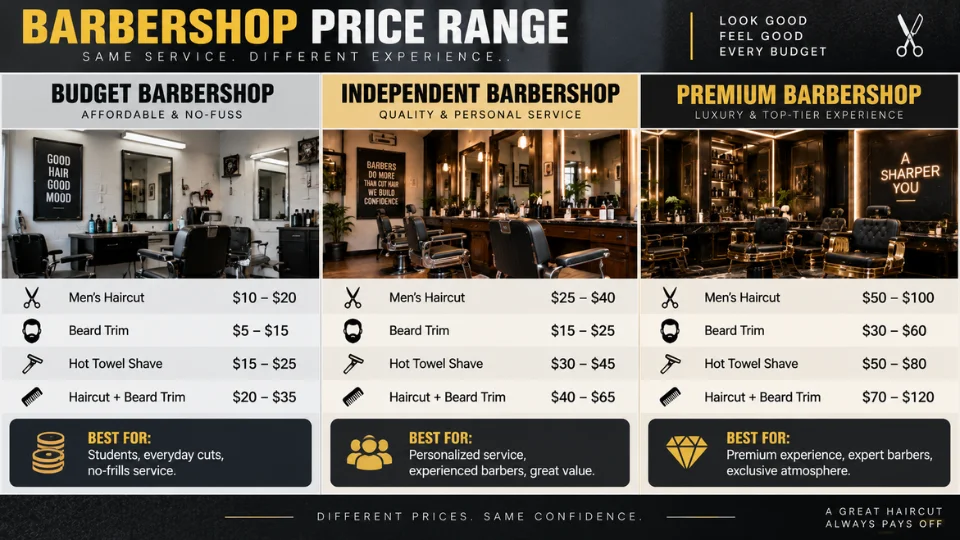
Haircut pricing varies a lot depending on where you live and the type of shop you visit, and this barber guide breaks down what you can realistically expect to pay.
| Shop Type | Typical Price Range |
| Budget chain barbershop | $15 to $25 |
| Independent neighborhood barbershop | $25 to $45 |
| Premium or specialty barbershop | $45 to $75+ |
| Add-on beard trim | $10 to $20 |
What Affects Haircut Pricing
Location plays a large role, with major cities generally costing more than smaller towns. Complexity matters too, since a simple buzz cut typically costs less than a detailed skin fade with line-up work.
Budgeting for Regular Maintenance
Since fades need touch-ups every one to four weeks depending on the style, it is worth factoring recurring visits into your grooming budget. Many regulars find a membership or loyalty program pays off if they get fades touched up frequently.
How to Prepare for Your Barber Appointment
A little preparation goes a long way toward a smoother appointment and a better result, and this part of the barber guide covers exactly what to do beforehand.
Haircut Preparation Checklist
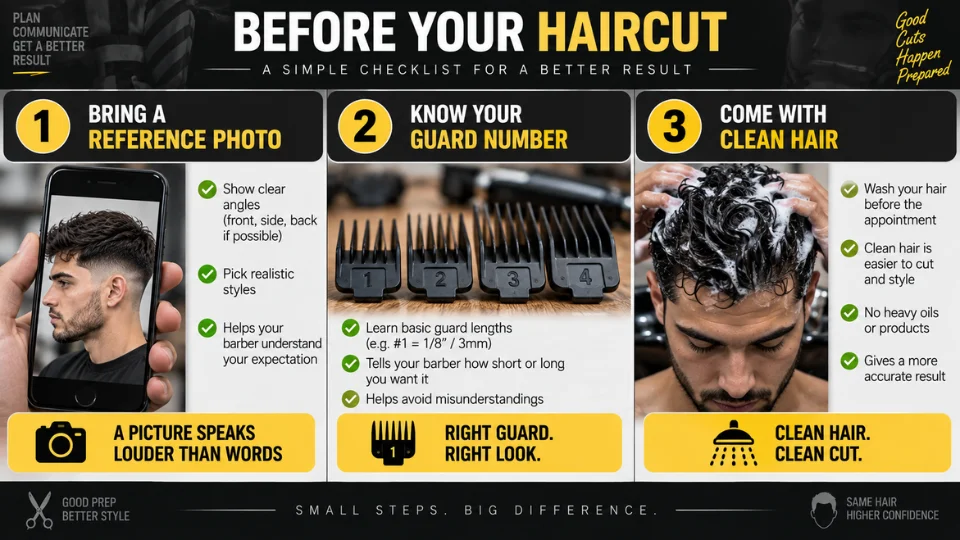
- Save one or two clear reference photos, ideally from multiple angles
- Note the exact guard numbers from your last good haircut if you have them
- Arrive with clean, dry or slightly damp hair rather than freshly washed and soaking wet
- Avoid heavy product buildup before your appointment so your barber can see your natural texture
- Think through your face shape and hair type talking points in advance
What to Bring and What to Avoid Before a Cut
Bring your phone with reference photos ready to show, not just described from memory. Avoid booking a haircut immediately before a big event with zero buffer time, since even a great barber occasionally needs a small adjustment after you see the finished look in daylight.
How to Talk to Your Barber So You Get the Cut You Actually Want
A great haircut starts before the clippers even turn on, which is why this barber guide treats the consultation as its own critical step. The consultation is where most disappointing haircuts actually go wrong.
What to Say (and Show) During a Consultation
Be specific. Instead of “shorter on the sides,” say “a mid fade with a number 2 guard blending into a number 4 on top.” Mention your face shape preference, hair type quirks, and how much daily styling time you want to spend. If a certain length bothered you last time, say exactly what to change.
Barber Consultation Checklist
- State the fade height (low, mid, or high) or taper preference
- Give specific guard numbers for sides and top, if known
- Mention any hair problem areas like cowlicks or a receding hairline
- Share your styling routine and how much daily upkeep you want
- Confirm the finished length before the barber starts cutting
Reference Photos: How to Use Them Correctly
Photos help, but only with context. A photo alone does not show your hair’s natural texture or density, which can make the same cut look different on you. Use it as a starting point, then explain any adjustments needed for your hair type.
Red Flags a Consultation Is Going Wrong
If a barber skips questions, jumps straight into cutting without confirming guard numbers, or seems unfamiliar with a term you used, pause and clarify before they start. A thirty-second conversation upfront can save you weeks of growing out a bad cut.
What Happens During a Barber Appointment, Step by Step
If you are new to getting regular haircuts, here is what a typical appointment looks like from start to finish.
The Consultation
Your barber asks what you want, checks your hair’s natural growth pattern, and confirms guard numbers before starting.
The Cut & Fade Process
Clippers handle the bulk of the length, moving from longer guards to shorter ones toward the fade line. Scissors or texturizing shears finish the top.
The Finish — Line-Up, Styling & Product
A trimmer or razor sharpens the hairline and neckline, then a small amount of product is applied so you can see the finished look before leaving the chair.
Common Barber Mistakes (And How to Avoid Them)
Some of the most common haircut disappointments come from small, avoidable mistakes on either side of the chair.
Client-Side Mistakes to Avoid
Being too vague with instructions, forgetting to mention a hair problem area, and staying quiet until the very end are the most common client mistakes. Fixing a fade line after it is fully finished is much harder than adjusting mid-cut, so speak up as soon as something looks off.
Barber-Side Warning Signs
A rushed consultation, ignoring your specific requests, or applying the same fade template regardless of hair type are signs the barber may not be the right long-term fit. A good barber treats every head as slightly different, even with the same general technique.
Aftercare Guide: What to Do Right After Your Haircut
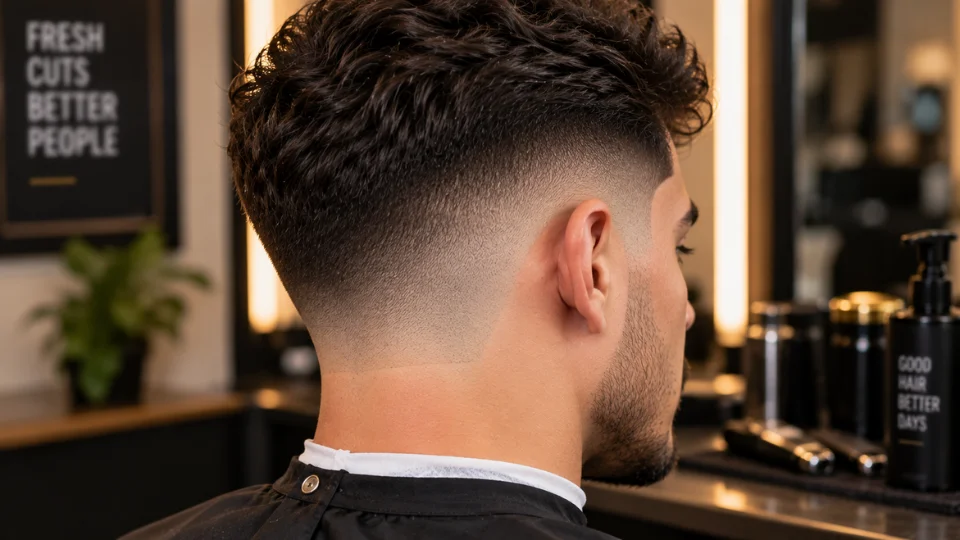
Aftercare is the part most barber guides skip, yet it directly affects how long your cut looks sharp.
The First 24 to 48 Hours
Avoid touching or restyling a fresh fade too much in the first day, since freshly cut hair and skin can be slightly sensitive around the line-up. A little redness or itchiness around the neckline is normal and usually fades within a day.
Washing and Styling Post-Cut
Most barbers recommend waiting a few hours before washing your hair, using a gentle shampoo rather than anything heavily medicated right away. Once you wash, restyle with a small amount of product to help the cut settle into shape.
Dealing with an Itchy Neck or Irritation
A cool rinse and a fragrance-free moisturizer usually settle minor post-haircut itchiness. If irritation lasts more than a couple of days or looks like a rash, check with a dermatologist rather than assuming it will resolve on its own.
Barbershop Etiquette & Practical Logistics
A few practical norms make barbershop visits smoother for everyone.
How Much to Tip a Barber
In the United States, 15 to 20 percent of the total service cost is standard, with 20 percent common for a regular barber. Tipping norms vary outside the US, so ask locally if you are unsure.
How Long a Haircut Appointment Takes
A standard men’s haircut takes 20 to 30 minutes, or closer to 45 minutes with a fade and beard trim.
Booking, Walk-Ins & Cancellation Norms
Many barbershops accept walk-ins, but booking ahead guarantees your preferred barber. If you need to cancel, a few hours notice is respectful, especially at shops with fixed appointment slots.
Haircut Maintenance Calendar
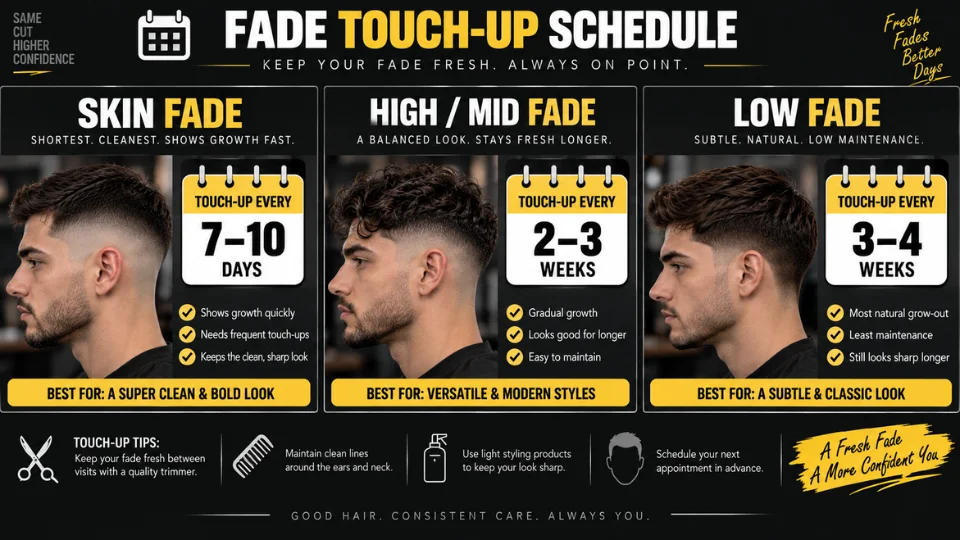
Keeping a cut looking sharp is about more than just the haircut itself. For a full breakdown of routines by style, see our haircut maintenance guide.
Daily Styling Routine by Hair Type
Straight and wavy hair generally styles well with a lightweight pomade or clay. Curly and coily hair benefits from a leave-in moisturizer before any styling product to prevent dryness and frizz.
Your Touch-Up Calendar
| Fade Type | Recommended Touch-Up Frequency |
| Skin Fade | Every 1 to 2 weeks |
| High/Mid Fade | Every 2 to 3 weeks |
| Low Fade | Every 3 to 4 weeks |
| Taper (no hard fade line) | Every 4 to 6 weeks |
At-Home Fade Maintenance: What You Can (and Cannot) Safely Do
Cleaning up your own neckline with a trimmer between visits is usually safe and simple.
Warning: attempting to redo the fade line itself at home is risky, since blending requires steady hand control and the right guard sequence. A mistake here is much harder to fix than a slightly grown-out neckline, so leave full fade touch-ups to your barber.
A to Z Barber Glossary
This barber guide closes with a quick reference for any term not covered earlier.
- Blending: Smoothing the transition between two hair lengths so there is no visible line.
- Clipper-over-comb: A freehand technique using clippers guided by a comb instead of a guard.
- Crown: The area at the back top of the head where hair often grows in a spiral pattern.
- Edge-up: Another term for a line-up, sharpening the hairline and neckline.
- Fade: A gradual blend from longer hair to very short or bare skin.
- Freehand fade: Fading without a guard, using clipper angle and pressure alone.
- Guard: The plastic attachment on clippers that sets cutting length.
- Hairline: The natural border where hair growth begins at the forehead and temples.
- Line-up: Sharpening the hairline, sideburns, and neckline for a crisp edge.
- Nape: The area at the back of the neck where hair meets bare skin.
- Pomade: A styling product for hold and shine, in water-based and oil-based formulas.
- Point cutting: Cutting hair at an angle to create softer, textured ends.
- Scissor-over-comb: A precision technique using scissors guided by a comb.
- Skin fade: A fade that blends all the way down to bare skin.
- Taper: A gradual shortening of hair toward the neckline, without reaching skin.
- Temple fade: A subtle fade focused only around the temple area.
- Texturizing: Removing bulk and adding movement using thinning shears or a razor.
- Thinning shears: Scissors with notched blades that remove weight without shortening length.
- Wet shave: A traditional razor shave performed with shaving cream and hot towels.
People Also Ask
What is the difference between a barber and a hairdresser? Barbers specialize in men’s short hair, fades, and shaves, with training focused specifically on those services. Hairstylists train more broadly across coloring, texture, and longer hair.
What does “fade” mean in a haircut? A fade is a gradual blend from longer hair on top to very short or bare skin on the sides and back, with no visible line between lengths.
What clipper guard number should I ask for? It depends on the look you want, but a number 2 or 3 is a common starting point for sides, with shorter guards used for the fade itself.
How do I know what haircut suits my face shape? Trace your face shape using a mirror or photo, then match it to general style guidelines like adding height for round faces or width for longer faces.
How often should men get a haircut? Every 2 to 4 weeks on average, though sharper fades need touch-ups closer to every 1 to 2 weeks.
How much should you tip a barber? 15 to 20 percent of the total service cost is standard in the US.
How much does a haircut usually cost? Prices typically range from around $15 at a budget chain to $75 or more at a premium specialty barbershop, depending on location and cut complexity.
Can curly hair get a skin fade? Yes, though curly hair often needs more frequent touch-ups since new growth shows more quickly against a very short fade line.
What is the difference between a taper and a fade? A taper gradually shortens hair without necessarily reaching the skin, while a fade blends down to very short length or bare skin for a sharper contrast.
How long does a men’s haircut take? Around 20 to 30 minutes for a standard cut, or up to 45 minutes for a detailed fade with a beard trim included.
Frequently Asked Questions
Final Thoughts
A great haircut starts before the clippers turn on. This barber guide walked you through terminology, hair type, face shape, and what to expect around cost, hygiene, and aftercare, so you can walk into any barbershop with confidence and walk out looking the way you intended every time.
Ready to go deeper on a specific style? Explore our full breakdowns of the burst fade haircut, low fade, mid fade, and high fade, or check out our beard styles guide to round out your grooming routine.
Written and researched by Ryan Carter for BurstFadeBlog.com, based on barbering industry standards and hands-on research into men’s grooming trends.
Sources referenced for training, safety, and hygiene information: American Academy of Dermatology for general scalp and hair health guidance, and the CDC for personal care tool sanitation standards.
About Ryan Carter
Men’s Hairstyle Writer & Grooming Content Specialist
Ryan Carter is a men’s hairstyle writer and grooming content specialist at BurstFadeBlog.com, specializing in burst fade haircuts, fade variations, and modern men’s hairstyles. He researches professional barbering techniques, current hairstyle trends, and trusted grooming resources to create practical, easy-to-follow haircut guides. Ryan regularly reviews and updates his articles to ensure every guide remains accurate, up to date, and genuinely helpful for readers planning their next visit to the barber.
All articles published on BurstFadeBlog.com follow our editorial standards and are reviewed regularly to ensure accuracy, freshness, and reader value.