Burst Fade Haircut Guide: 35 Styles by Face Shape & Hair Type (2026)
The burst fade haircut is one of the most requested cuts in barbershops right now, and it’s easy to see why. Instead of a straight line running down the side of the head like a traditional fade, the burst fade curves in a rounded “burst” around the ear, a small change in shape that makes a big difference in how sharp and modern the finish looks.
This guide covers all 35 major burst fade variations, matched to specific hair types and face shapes, plus the exact language to use with your barber, a full styling and maintenance routine, and a step-by-step breakdown of how the cut is actually done. Whether you’re walking into a barbershop for the first time or you’ve been getting fades for years and want to try something sharper, you’ll find a version of the burst fade that fits your hair, your face, and your lifestyle.
Quick Answer
A burst fade haircut is a fade that curves around the ear in a
rounded, “burst” shape instead of running in a straight line. It’s the most
requested modern fade because it blends cleanly into almost any top style,
mullets, curls, mohawks, or a simple textured crop.
What is a Burst Fade Haircut?
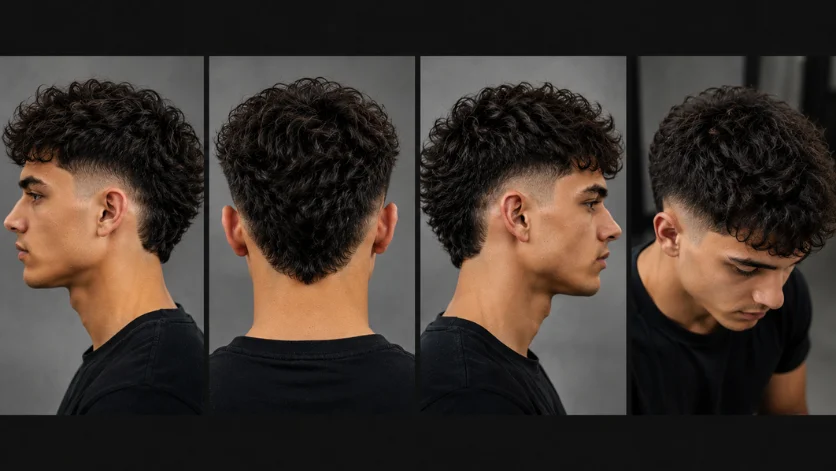
A burst fade haircut is a men’s hairstyle where the fade curves around the ear in a rounded, semi-circular shape instead of running in a straight line down the side of the head. That curve is what gives the cut its name, the fade appears to “burst” outward from behind the ear rather than tapering evenly along the hairline.
Because the fade is concentrated around the ear rather than the whole side of the head, more length is preserved at the back and crown. That’s what makes the burst fade so easy to pair with longer top styles — mullets, mohawks, quiffs, and textured crops all rely on that extra length staying intact while the sides stay clean.
The burst fade works on straight, wavy, curly, thick, and coily hair, which is a big part of why it’s become a go-to request across such a wide range of clients rather than staying a niche style.
Who Should Get a Burst Fade Haircut?
The burst fade is a strong fit if you want a cut that reads as sharp and intentional without going full skin fade. It particularly suits:
- Curly, wavy, and coily hair : the rounded fade line complements natural curl patterns better than a straight-line fade does, because it follows the curve of the head rather than fighting the direction hair naturally grows around the ear.
- Round, oval, and square face shapes: the curved fade adds definition around the jaw and cheek without the harsh geometry a straight fade line can create on rounder faces.
- Anyone who wants one haircut for both casual and professional settings : a low or mid burst fade reads as polished enough for an office and can still be styled bold for a night out.
- People who want to keep length on top : because the fade is localized around the ear, it pairs naturally with mullets, quiffs, and longer textured styles that need the back and crown left alone.
If you have very fine or thinning hair, talk to your barber before committing to a high burst fade specifically, the higher contrast can draw more attention to density than a low or mid fade would. More on that in the hair-type section below.
Why Burst Fade Haircuts Are Trending in 2026
The burst fade has held its popularity for a few concrete reasons, not just algorithm-driven trend cycles:
It photographs and shows better than a standard fade. The curved line creates visible dimension from the front, side, and back, a straight taper mostly reads the same from every angle, while a burst fade’s shape is part of the style itself.
It scales up or down in boldness. A low burst fade is barely more dramatic than a standard taper; a high burst fade paired with a design is a full statement cut. That range means the same base technique works for a first-time fade client and a barber’s most fashion-forward regular.
Barbers can execute it on virtually any hair type, which keeps demand consistent instead of style-specific to one texture the way some trend cuts are.
It pairs with longer top styles without looking messy. As mullets, quiffs, and curly tops have trended up, the burst fade has ridden that wave because it’s one of the few fade styles that doesn’t require short hair on top to look finished.
Where the Burst Fade Comes From
The burst fade belongs to a broader family of fade haircuts that trace back through military and barbershop traditions of the 20th century, where gradually shortened sides became a practical, low-maintenance standard for short hair. Skin fades, taper fades, and drop fades all descended from that same basic idea, hair getting shorter in a controlled gradient rather than cut to one uniform length.
The specific “burst” shape, a fade that curves around the ear instead of running in a straight line, emerged more recently as barbers began experimenting with rounding the fade line to better follow the natural curve of the head and hairline around the ear, rather than forcing a straight taper line across it. This technique gained traction because it solved a real problem: straight-line fades can look harsh or disconnected on hair that grows in a rounded pattern around the ear, especially on curly and coily textures.
Like most modern barbering trends, the burst fade’s rise in mainstream popularity accelerated through social media and short-form video in the 2010s and 2020s, where barbers began sharing technique breakdowns and finished results to wider audiences than a single shop’s clientele. That visibility turned what had been a specialist technique into one of the most commonly requested fade shapes in barbershops today, and it’s now taught as a standard technique in most modern barber training, alongside the taper, drop, and skin fade.
Understanding where the technique comes from doesn’t change how it’s cut, but it does explain why some barbers execute a noticeably cleaner burst shape than others: it’s a technique built on precise, curved guideline work, not just running a clipper guard down the side of the head. That’s also why the “Choose the Right Barber” section below matters as much as choosing the right style.
35 Burst Fade Haircut Styles for Men
Below are the 35 most-requested burst fade variations, organized from mullet variations through the full range of top-length, texture, and color combinations. Each entry includes what makes it distinct, who it suits best, and a real styling tip, not a repeated formula.
1: Burst Fade Mullet
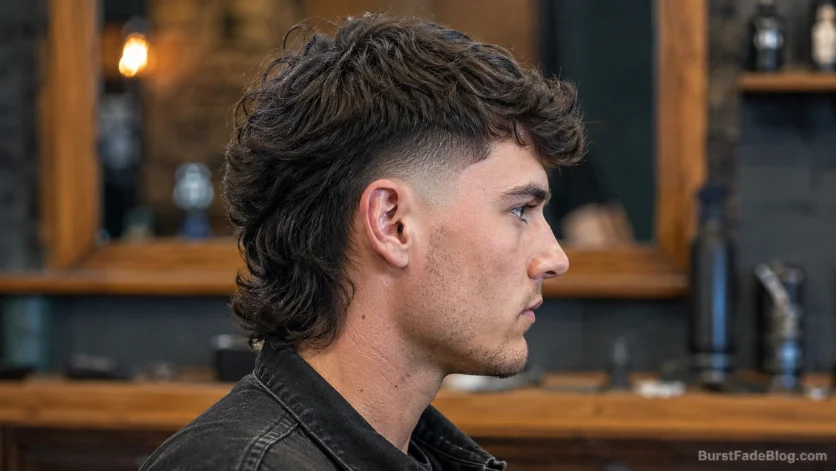
The burst fade mullet pairs short, faded sides with noticeably longer hair left at the back, the opposite of most modern fades, which taper length evenly all the way around. The burst shape keeps the transition from short to long clean right behind the ear instead of leaving an awkward line where the mullet length starts. Ask your barber to leave at least 3–4 inches at the back if you want the mullet length to actually read as intentional rather than “grown-out fade.”
Low Burst Fade Mullet
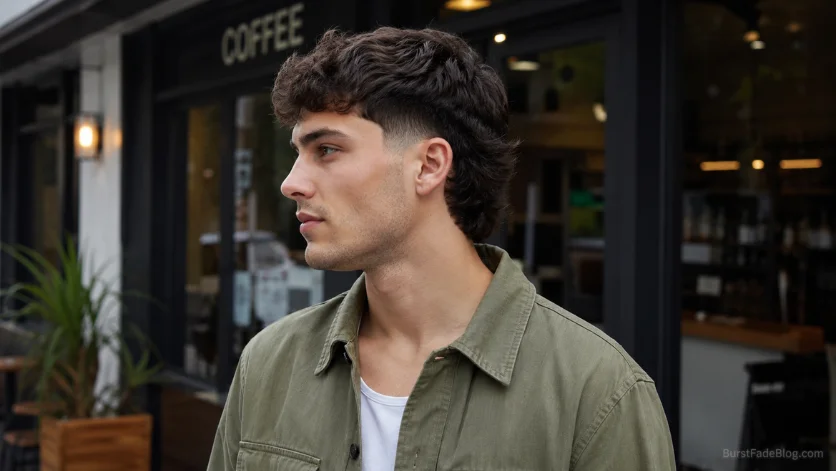
The Low Burst Fade Mullet keeps the fade closer to the ear and neckline, creating a soft and natural transition into the longer back hair. Among popular Burst Fade Haircut Ideas, this style is ideal for men who prefer a subtle, clean, and modern appearance.
Mid Burst Fade Mullet
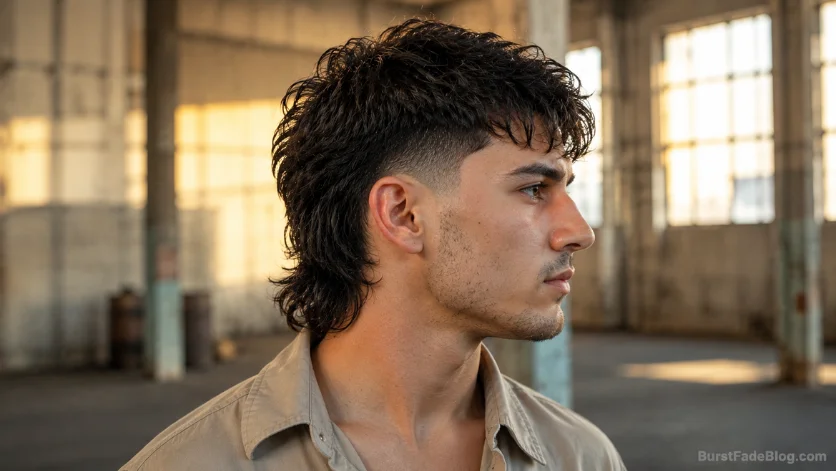
The Mid Burst Fade Mullet starts the fade around the middle of the head, creating a balanced blend between the faded sides and the longer mullet at the back. It offers a clean yet modern look that suits most face shapes and works especially well with straight or wavy hair.
High Burst Fade Mullet
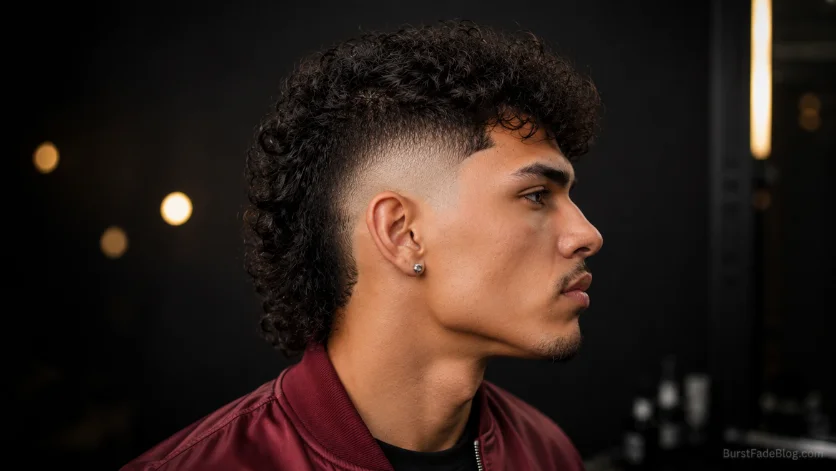
The high burst fade mullet starts above the ear, creating sharp contrast between the closely faded sides and the longer back. This version needs more frequent upkeep, the high fade line grows out visibly within 2–3 weeks, but it delivers the boldest version of the mullet silhouette.
Straight Hair Burst Fade Mullet
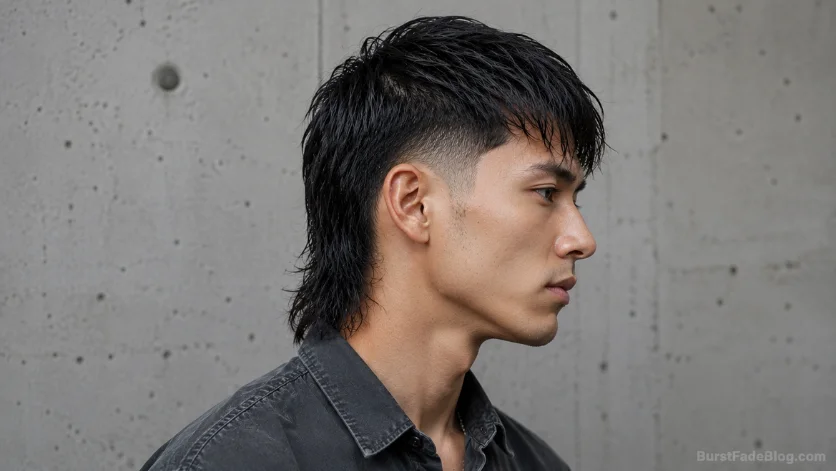
On straight hair, the mullet’s back length lies flat and shows a clean, controlled line rather than movement — which is either exactly the polished look you want or a reason to add texture spray if you’d prefer more visual separation between the layers.
Curly Hair Burst Fade Mullet
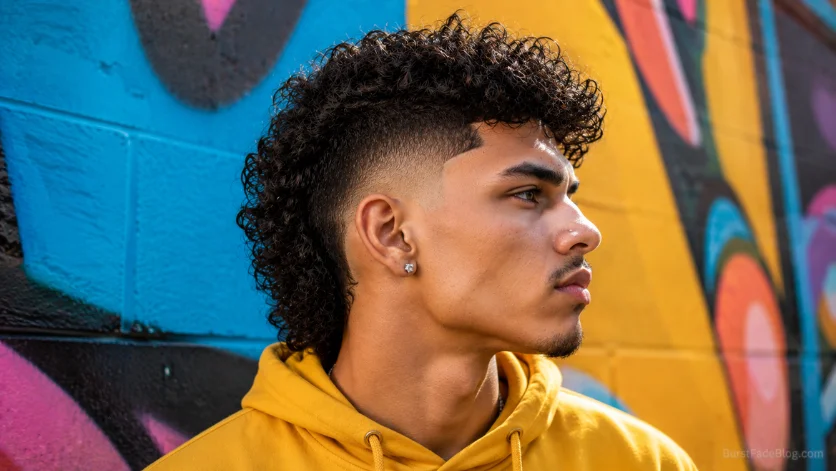
Curly hair adds volume and natural texture to the Burst Fade Mullet. The curls make the style look fuller and more stylish, giving a relaxed yet trendy appearance that stands out easily.
2: Low Burst Fade
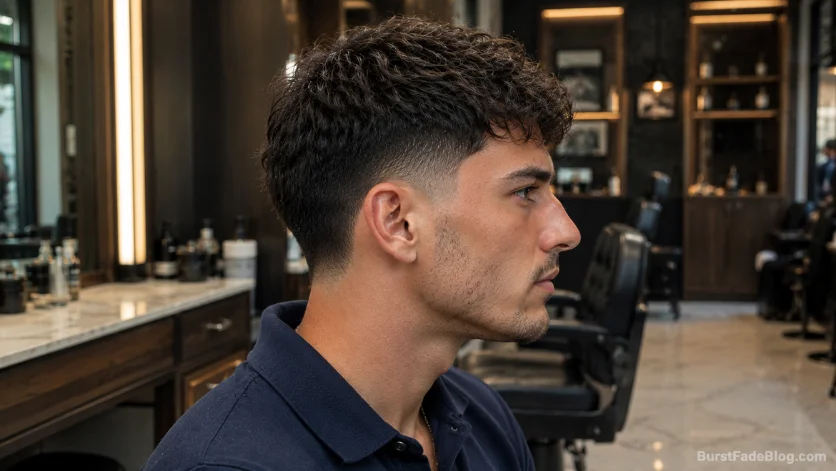
The low burst fade keeps the fade starting just above the ear, which is the most forgiving version of the cut as it grows out, you can typically go 3–4 weeks between trims before the line loses its shape. It’s the best entry point if you’ve never had a fade before and aren’t sure how much contrast you want.
3: Burst Fade Curly Hair
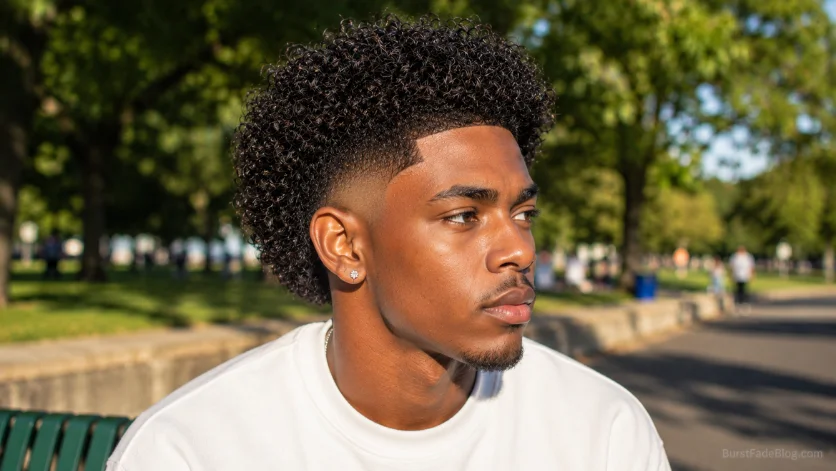
This style is made for curly hair and enhances natural texture. It makes curls look more defined, fresh, and full of life. The burst fade keeps the sides clean while the top stays voluminous and stylish.
4: Mid Burst Fade
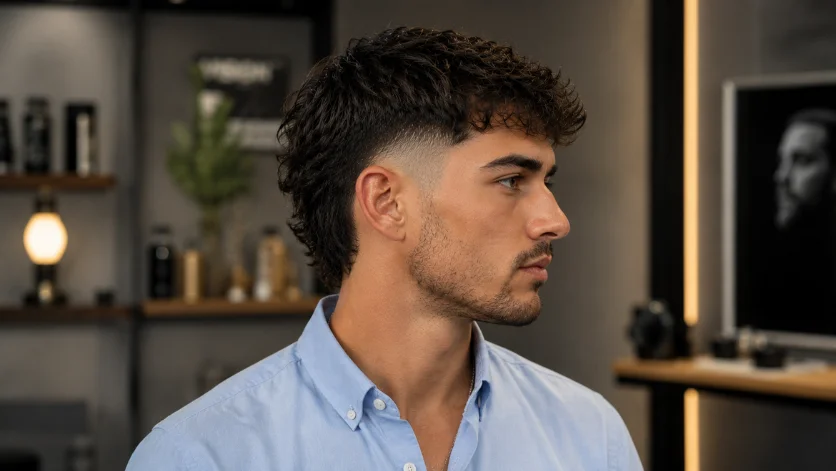
A Mid Burst Fade is balanced and modern, starting between low and high fade levels. It works well for all face shapes and gives a clean, stylish look that suits both casual and formal styles.
5: Burst Fade with Design
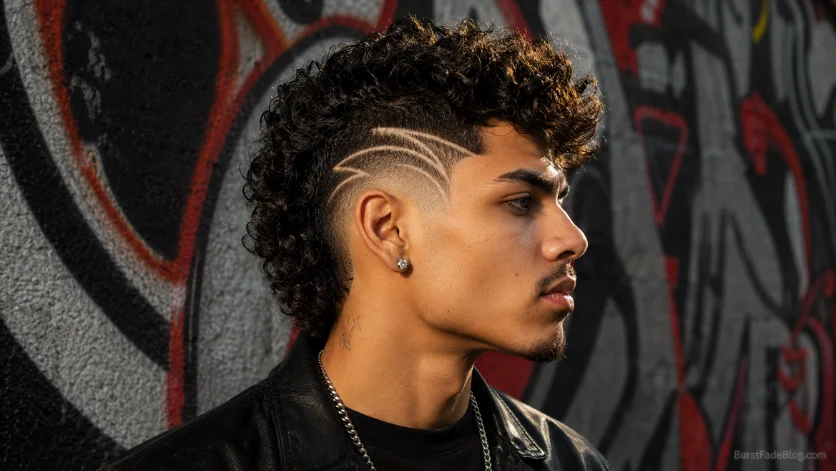
Adding a shaved line or pattern into the fade area turns the cut into a more personalized, statement style, commonly a single line, a geometric shape, or initials worked into the transition zone behind the ear. Because the design sits in the fastest-growing part of the hairline, it needs a touch-up every 7–10 days to stay sharp, noticeably more frequent than a standard burst fade.
6: Burst Fade Mohawk
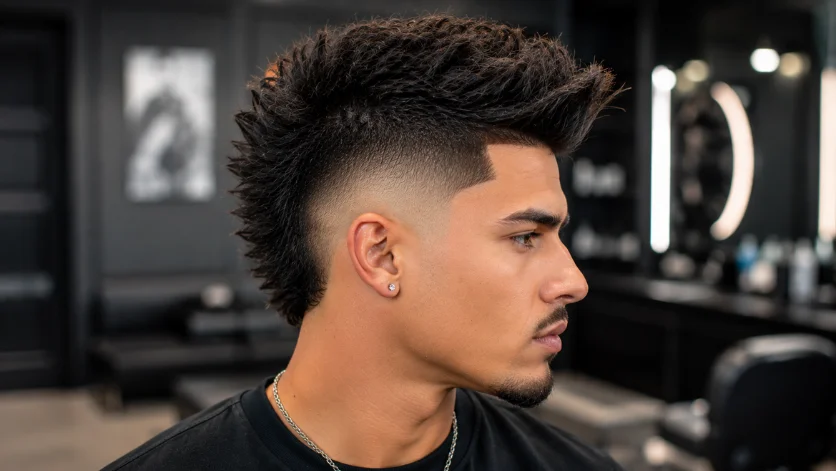
The burst fade mohawk keeps a strip of longer hair down the center while fading the sides around the ears in the signature burst shape. Unlike a traditional mohawk with a hard-shaved line at the strip’s edge, the burst fade’s rounded blend gives the style a less severe, more wearable transition, it reads as bold without looking like a costume cut.
7: Burst Fade Straight Hair
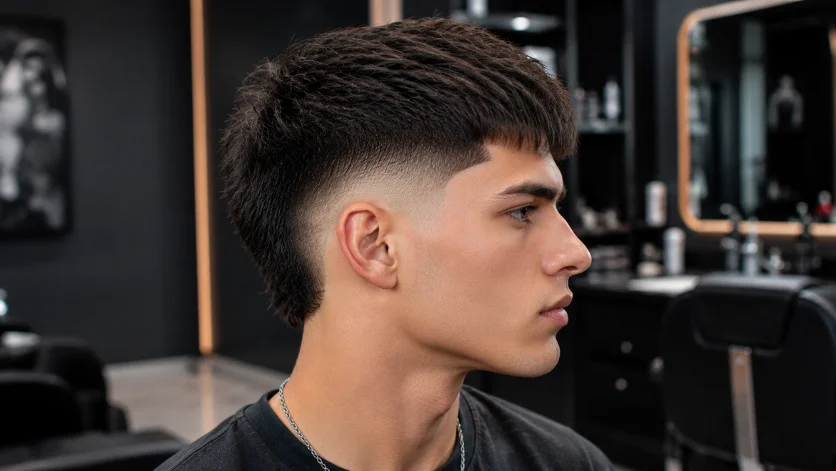
Straight hair shows the burst fade’s line with the most precision of any texture, since there’s no natural wave or curl to soften the transition, which means any unevenness in the cut will be more visible here than on textured hair. This is the version where barber skill shows the most, so it’s worth asking to see recent work specifically on straight hair before booking with someone new.
8: Taper Burst Fade
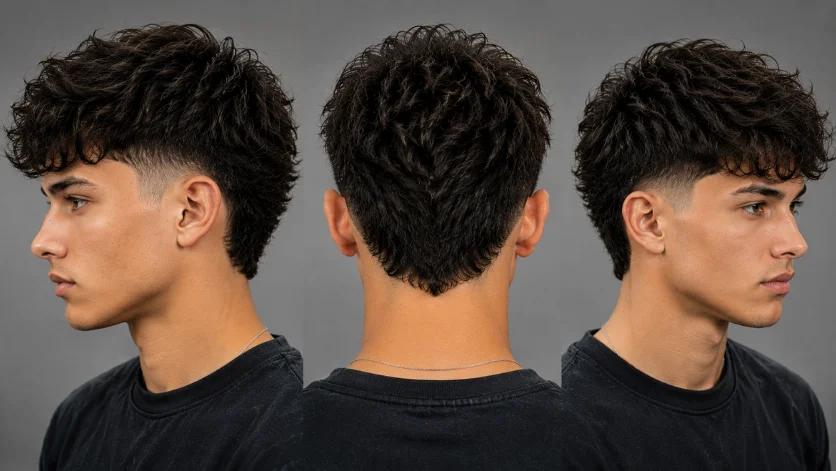
The burst fade taper softens the burst shape into a more gradual transition around the neckline and sideburns, which reads as more conservative and office-appropriate than a sharper burst fade. It’s a strong option if you want the visual interest of the burst shape without a fade line that draws attention on its own.
9: High Burst Fade
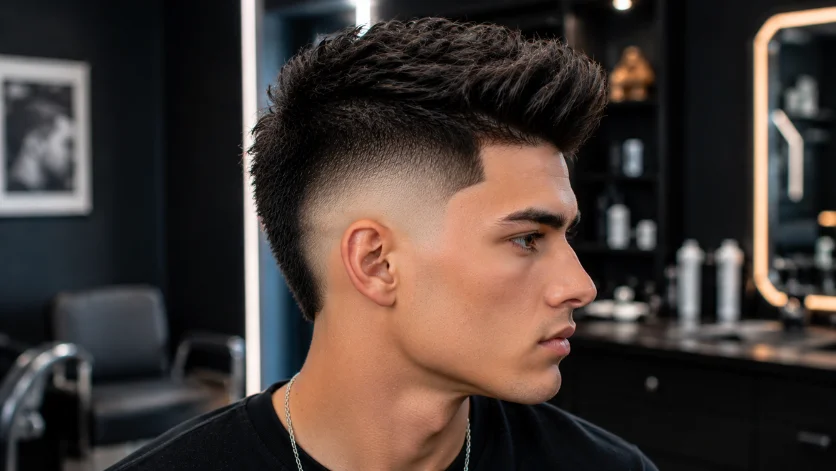
A high burst fade starts the fade well above the ear, creating the strongest contrast in this entire list between the skin-close sides and the length on top. Because so little hair is left on the sides, this version needs a touch-up every 2 weeks to stay clean, plan for that maintenance commitment before choosing it over a mid or low fade
10: Burst Fade Buzz Cut
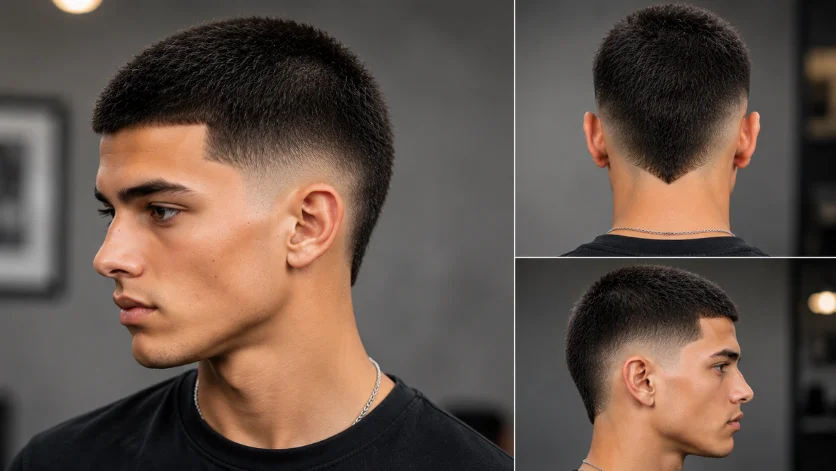
The burst fade buzz cut pairs uniformly short hair on top with the curved burst transition on the sides, genuinely one of the lowest-maintenance fade combinations available, since there’s no length on top to style at all. It’s a strong choice for anyone who wants a clean look without a daily styling routine, or who’s easing into short hair for the first time.
11: Short Burst Fade
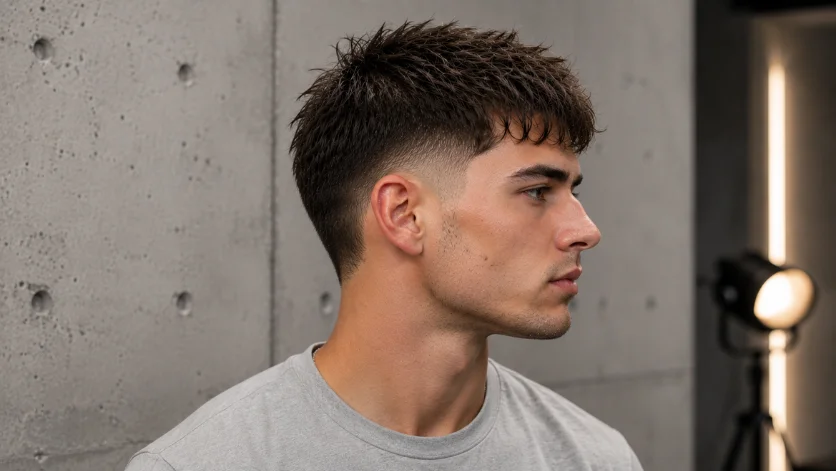
A short burst fade keeps minimal length on top, enough to show texture, not enough to require product every day, with the same rounded fade around the ear. It sits between a buzz cut and a textured crop in terms of commitment, making it a solid middle-ground option if you’re not ready to go fully short but want low daily maintenance.
12: Burst Fade Textured Fringe
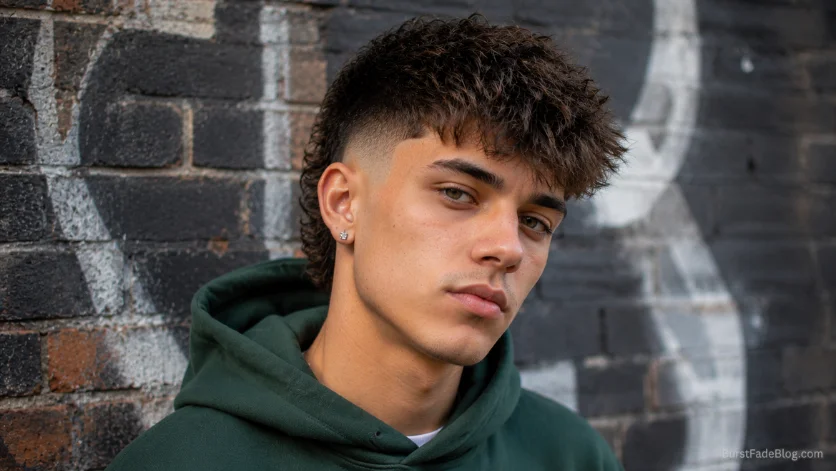
This variation styles the front section forward into a deliberately messy, textured fringe while keeping the sides clean with the burst fade. The contrast between the structured sides and the loose fringe is the point, too much product on the fringe and the “messy” effect disappears into a stiff, styled look instead.
13: V Shape Burst Fade
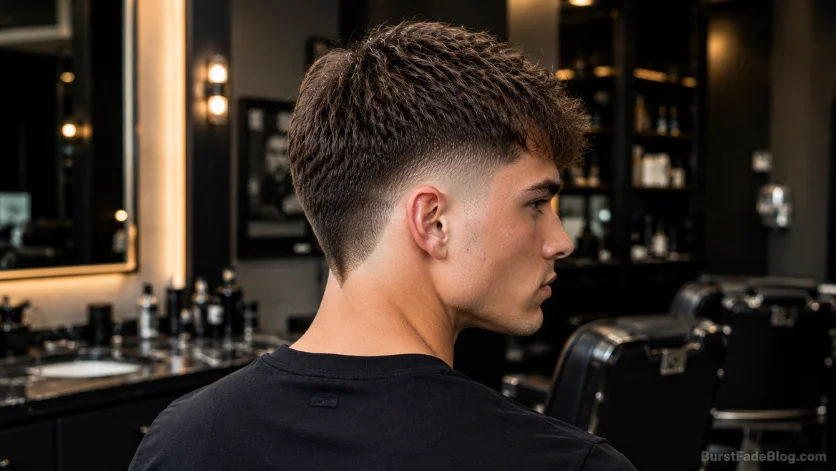
The V-shape burst fade adds a sharp V-shaped neckline at the back instead of the more common rounded or straight neckline, a small detail change that gives the back view a distinct, deliberate finish. It’s most commonly requested alongside a clean beard line, since the sharp angles of both elements reinforce each other.
14: Burst Fade Long Hair
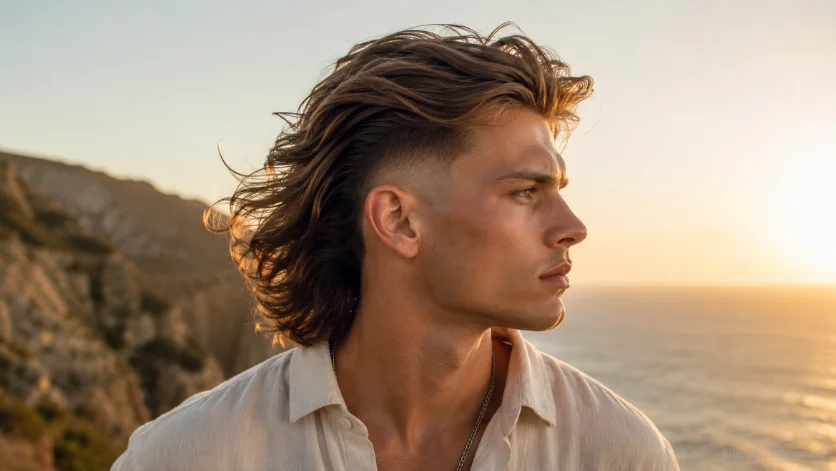
The Burst Fade Long Hair style keeps the top long while the sides are faded. It gives a modern and stylish contrast that works for both casual and trendy looks. You can style it in different ways easily.
15: Burst Fade Slick Back
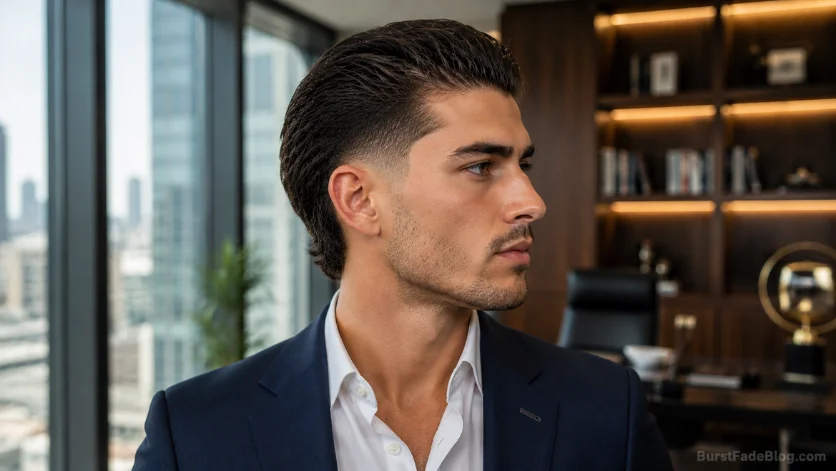
The burst fade slick back combs the top backward into a smooth, controlled finish, a style that reads as more formal than most burst fade variations, which is why it’s a common request for weddings, interviews, or client-facing work. The fade adds contrast without competing with the polished top.
16: Comb Over Burst Fade
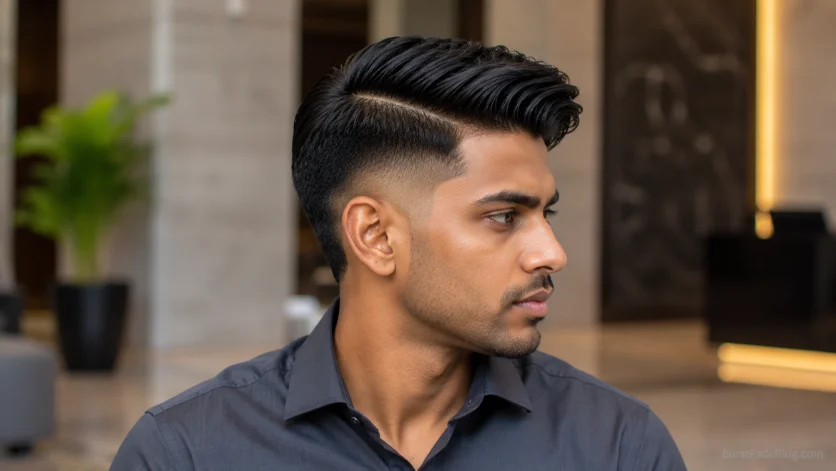
The comb over burst fade combines a side-swept part with faded sides — a more traditional, structured silhouette than most entries on this list. See the full comb over burst fade guide for part-line placement by hair density.
17: Burst Fade Wavy Hair
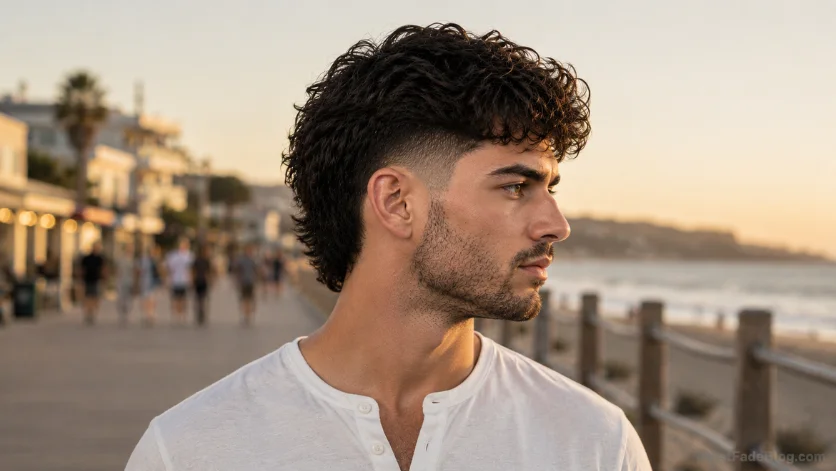
On wavy hair, the burst fade lets natural wave patterns show through on top while keeping the sides controlled, arguably the texture that needs the least styling effort to look intentional, since the waves do most of the visual work on their own.
18: Textured Burst Fade
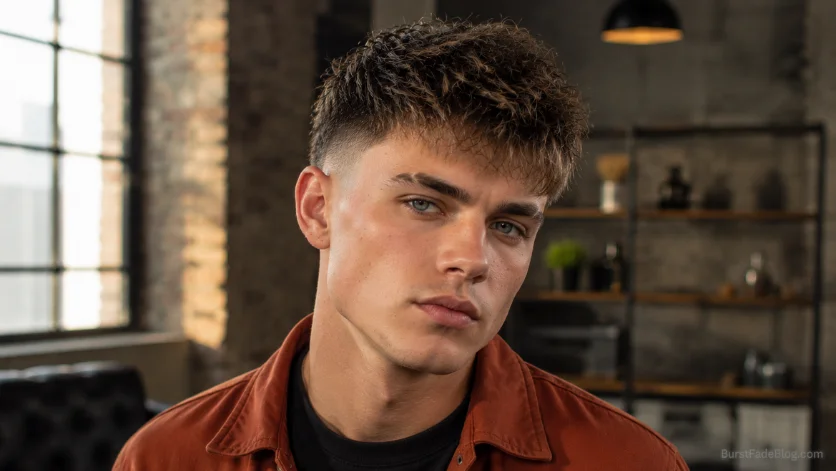
A textured burst fade keeps the top deliberately choppy and voluminous rather than smooth, using point-cutting or texturizing shears to remove weight from thick sections. It’s a strong option if you have hair that looks flat when cut blunt, the texturizing gives it movement a straight cut wouldn’t.
19: French Crop Burst Fade
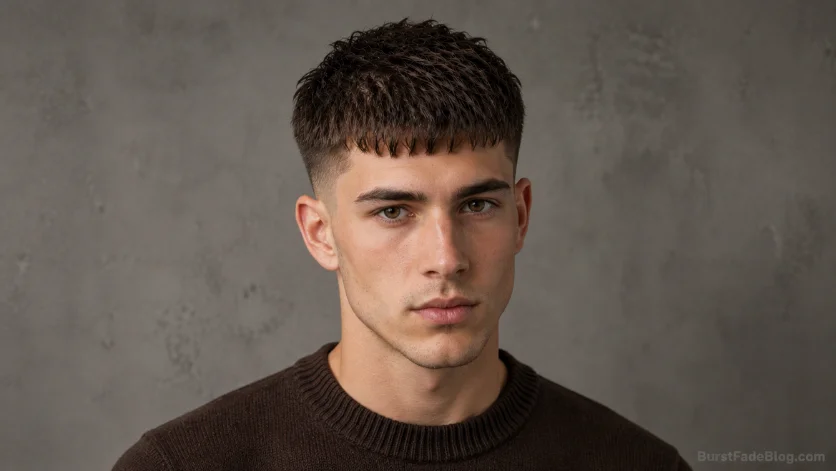
The French crop burst fade pairs a short, straight-cut fringe with faded sides, one of the lowest-maintenance top styles on this list, since the fringe requires no daily shaping decisions the way longer or textured tops do. It reads clean on nearly every face shape, which is part of why it’s stayed a consistently requested combination.
20: Burst Fade Back View
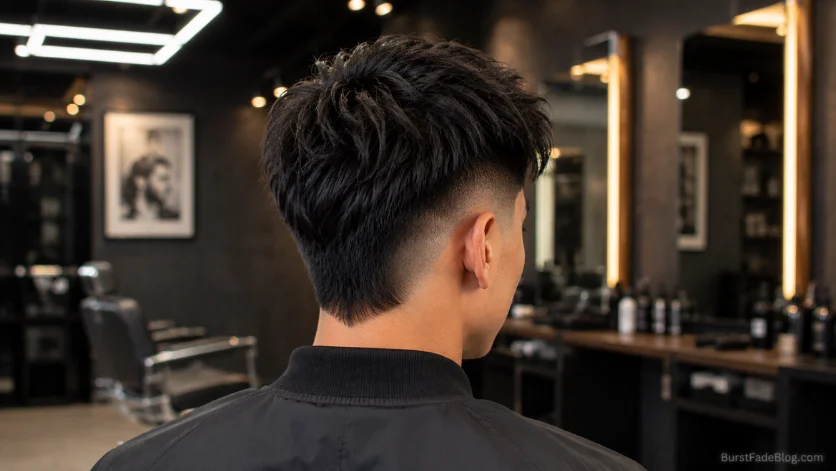
This style focuses on the back view of the haircut, especially the clean neckline and fade design. It gives a polished and sharp finish that looks good from every angle.
21: Burst Fade Edgar
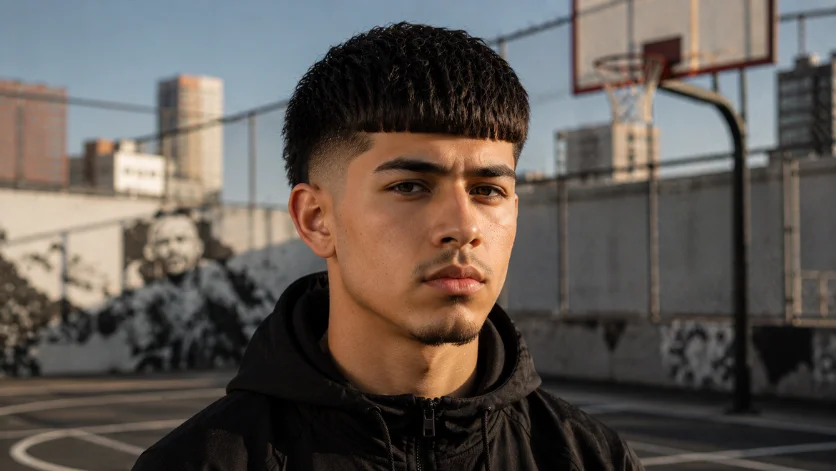
The burst fade Edgar pairs a straight-across, blunt fringe with the burst fade — a combination that gained mainstream popularity through short-form video and has stayed one of the most-requested styles among younger clients since. The sharp fringe line requires more upkeep than a softer, textured fringe, since any grow-out is immediately visible against the straight edge.
22: Burst Fade with Beard
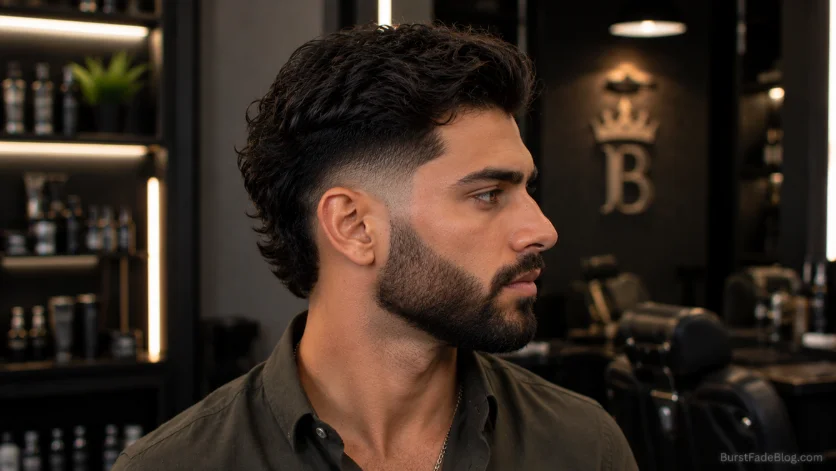
A burst fade with beard blends the haircut’s fade line directly into the beard fade, creating one continuous transition from hairline to jaw instead of two separate grooming zones. This takes more skill to execute well than either element alone, ask specifically whether your barber blends beard and hair fades together, since not every barbershop does both in the same visit.
23: Blowout Burst Fade
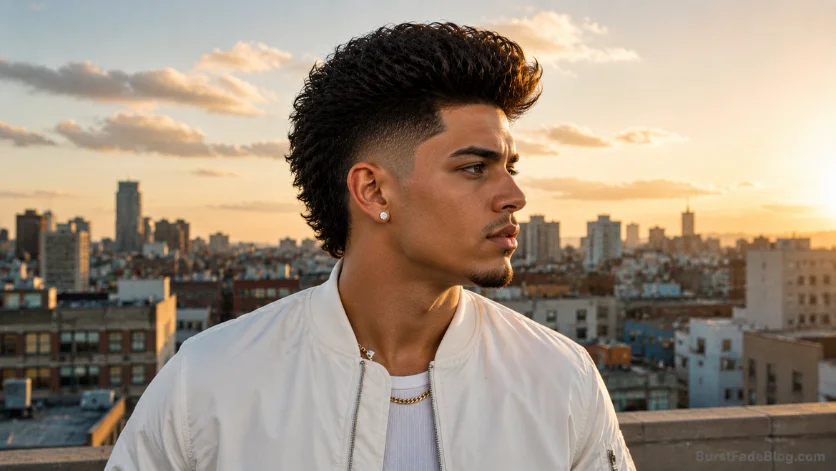
The Blowout Burst Fade features a voluminous top with clean faded sides. It gives a lifted, airy, and stylish look that feels modern and fresh. This haircut is perfect for men who like height and texture in their style.
24: Burst Fade for Black Men
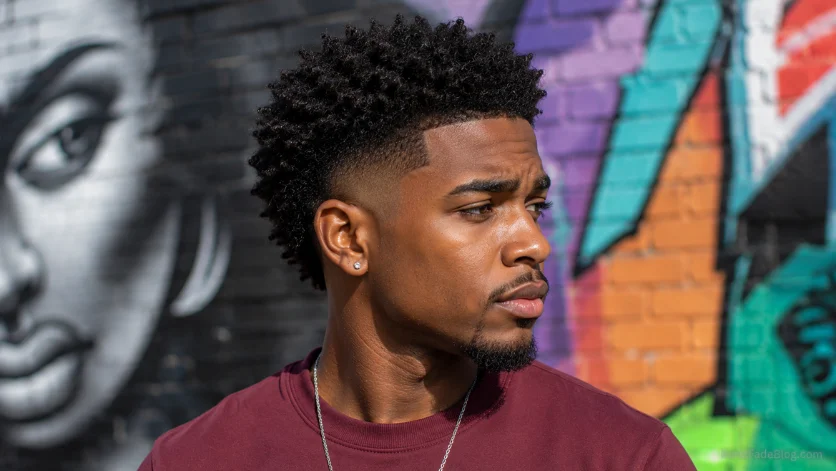
The burst fade is one of the more forgiving fade shapes for coily and afro-textured hair, since the rounded line follows the natural curve of the hair growth pattern around the ear rather than forcing a straight edge across it. See the dedicated guide to burst fade haircuts for Black men for barber-tested guidance on cutting technique by curl pattern (3A through 4C) and specific style pairings.
25: Asian Burst Fade
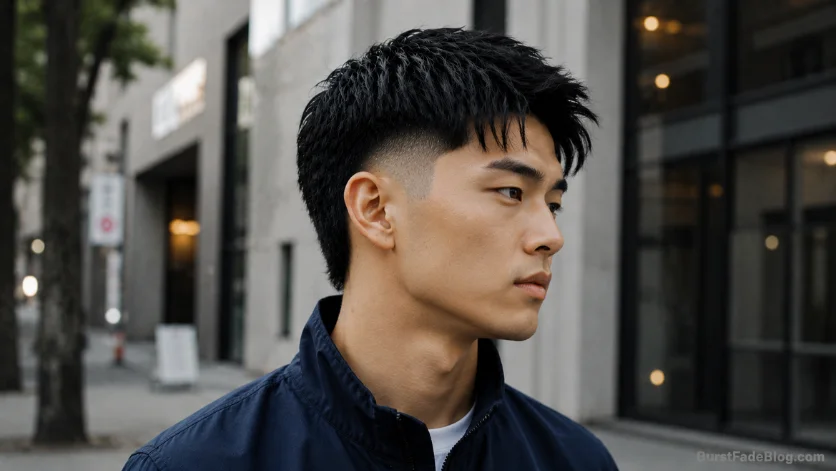
This variation is built around straight, dense hair types, which typically requires more thinning at the crown to prevent the top from looking heavy or helmet-like once the sides are faded. Ask your barber specifically about point-cutting or thinning shears if your hair tends to sit thick and stiff rather than falling naturally.
26: Burst Fade Blonde Hair
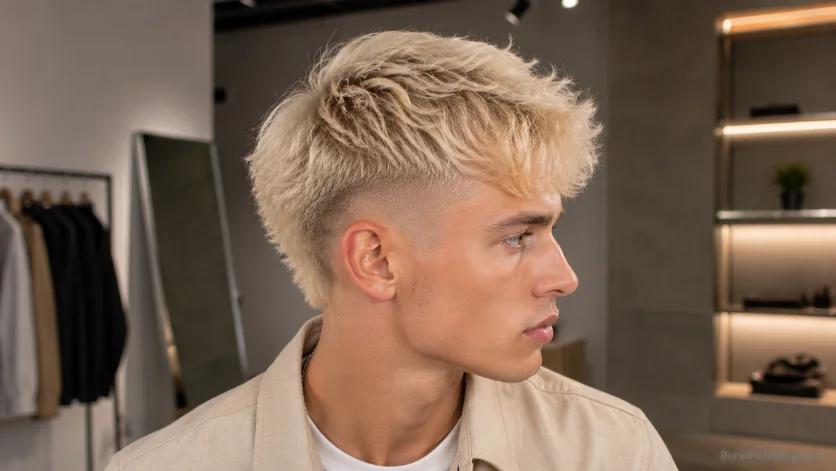
The Burst Fade Blonde Hair style stands out because light hair color makes the fade look more visible and sharp. It gives a modern and stylish appearance that highlights the clean blending of the burst fade. This look is very trendy in 2026.
27: Burst Fade Afro
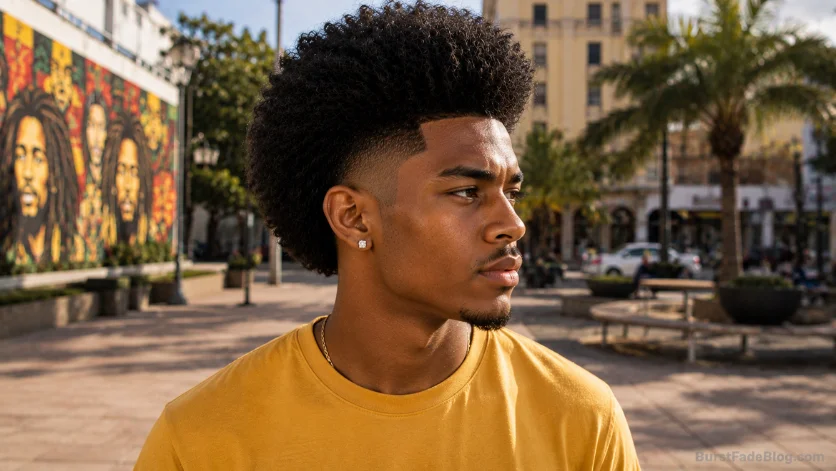
The Burst Fade Afro combines natural afro texture with clean faded sides. It keeps the afro full and shaped while the fade adds a sharp and neat contrast. This style looks bold, natural, and stylish at the same time.
28: Undercut Burst Fade
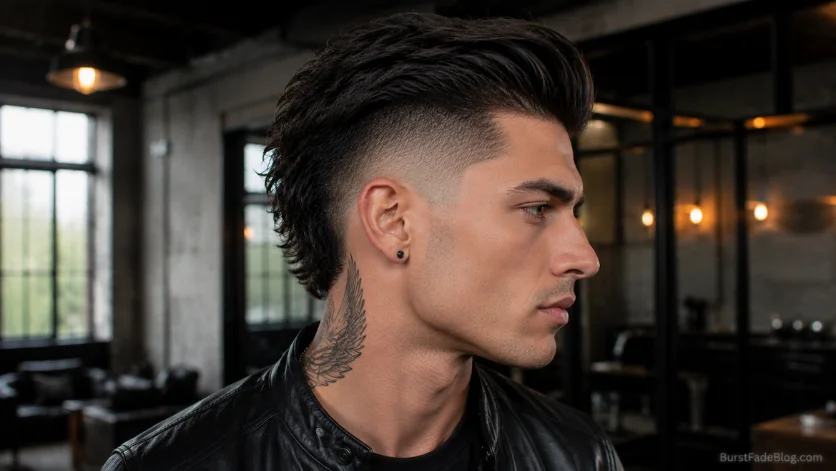
The undercut burst fade pushes the contrast further than a standard burst fade by keeping noticeably more length on top against a tighter fade below, the defining feature is that gap in length, not just the fade shape itself.
Styling Tip:Keep a medium to long top so the contrast with the fade looks clean and balanced.
29: Grown Out Burst Fade
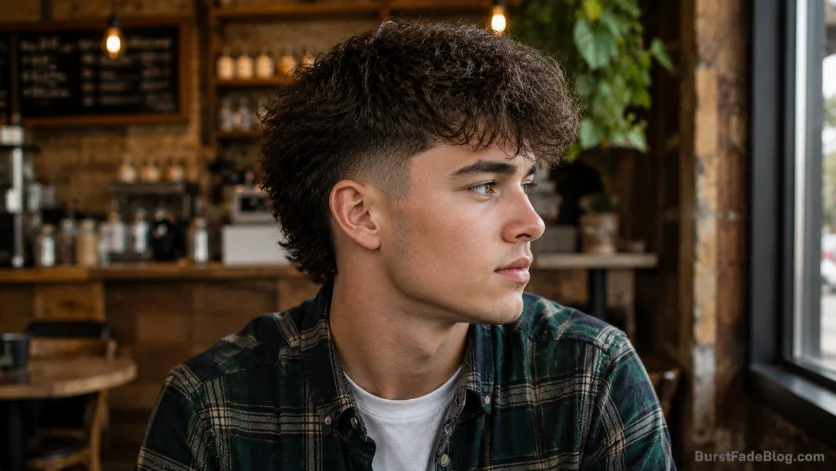
The Grown Out Burst Fade is a relaxed version of the style where the fade is slightly grown out. It gives a softer and more natural look while still keeping some structure and shape around the sides and neckline.
30: Burst Fade Fluffy Hair
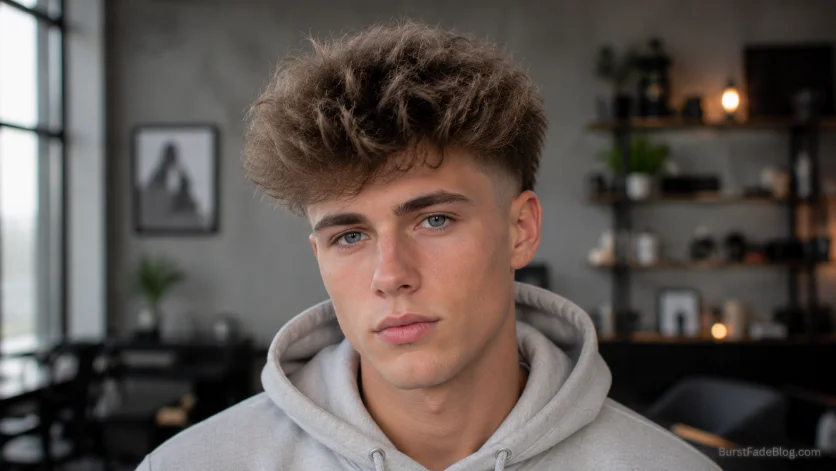
The Burst Fade Fluffy Hair style features soft, airy volume on top with clean faded sides. It gives a light, natural, and trendy look that feels relaxed but still stylish and modern in 2026.
31: Skin Burst Fade
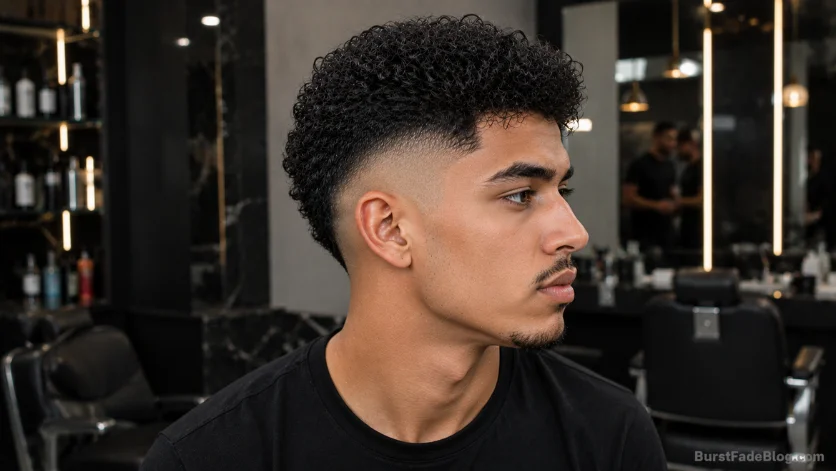
A skin burst fade takes the fade all the way down to bare skin rather than leaving light stubble, which creates the sharpest possible contrast against the top and requires the most frequent maintenance on this list, every 1–2 weeks, since regrowth is immediately visible against bare skin.
32: Drop Burst Fade
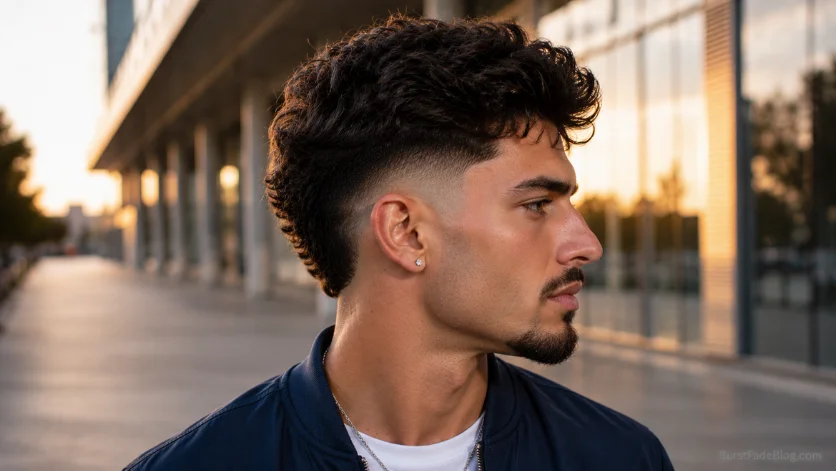
A drop fade curves lower behind the ear than a standard burst fade, following the natural curve of the skull down toward the nape rather than staying tight around the ear — a shape that tends to suit rounder face shapes particularly well, since the extra drop adds visual length along the jawline.
33: Messy Burst Fade
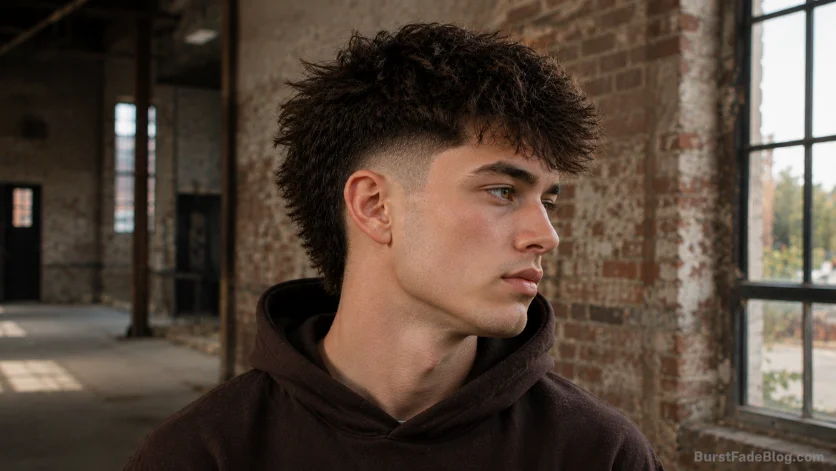
This pairs deliberately tousled, undone top texture with a clean burst fade underneath — the contrast between structured sides and loose top is the whole point, similar in spirit to the textured fringe but applied to the full top rather than just the front section.
34: Burst Fade Pompadour
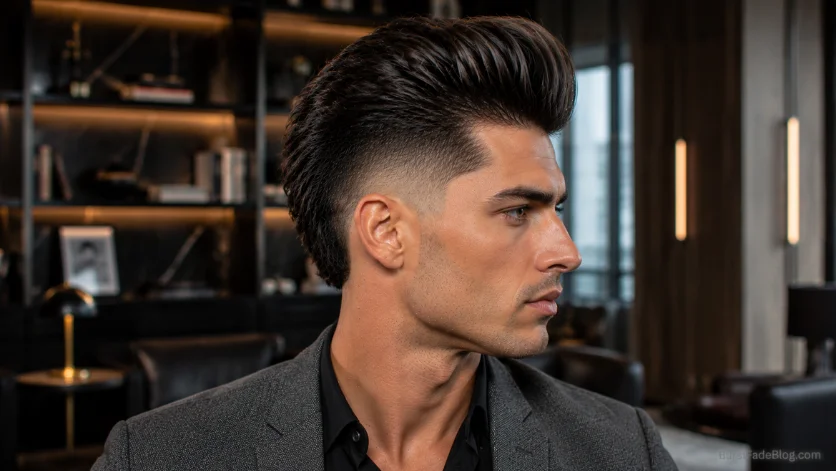
The burst fade pompadour combines a high-volume, swept-back front with the burst fade on the sides, a style with clear vintage roots that’s been consistently updated with modern fade techniques rather than falling out of rotation.
35: Burst Fade Quiff
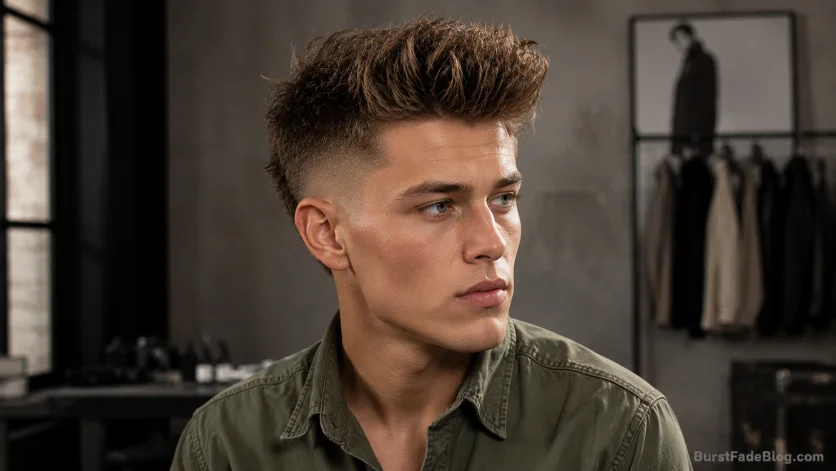
The burst fade quiff styles the front section upward and slightly back into a shorter, more compact version of a pompadour, paired with the burst fade below. It works for both casual and formal settings more easily than a full pompadour, since the shorter front section reads as less overtly styled.
How to Choose the Right Barber for a Burst Fade
Not every barber who can cut a clean taper fade can execute a burst fade well, the curved, rounded guideline takes more precision than a straight-line fade, and it’s worth screening specifically before you book.
Look at their portfolio for burst fades specifically, not fades in general. Instagram and TikTok make this easy, searching a barber’s tagged photos or portfolio for “burst fade” results rather than assuming general fade experience transfers directly. The curved shape is a distinct skill.
Ask how they handle the area behind the ear. This is the hardest part of a burst fade to execute cleanly, since visibility is limited and the curve has to stay consistent. A barber who can describe their approach confidently (working the guideline in small sections, checking symmetry from multiple angles) is a good sign; a vague answer is a reason to keep looking.
Check whether they specialize in your hair type. A barber with strong reviews cutting straight hair fades isn’t automatically equally skilled with coily or curly textures, and vice versa, the blending technique differs meaningfully by texture. If you have curly or coily hair, prioritize barbers whose visible portfolio includes that texture.
Read recent reviews, not just the overall rating. A 4.8-star average can still hide recent complaints about long wait times, rushed cuts, or inconsistent results. Sort for recent reviews specifically, since barbershop staff and quality can change.
Book a simpler style first if you’re trying a new barber. If you’re set on a bold variation, a design, a mohawk, a skin fade, consider a lower-risk first visit (a mid burst fade with a straightforward top) to evaluate a new barber’s fade work before committing to something harder to fix if it doesn’t go well.
Ask about touch-up policy. Reputable barbershops will often adjust a fade within a few days of the original cut at no charge if something looks off. Knowing this policy before you sit in the chair gives you a safety net.
How to Ask Your Barber for a Burst Fade
Walking in and saying “give me a burst fade” leaves a lot of room for interpretation. The more specific you are about these five details, the closer the result will match what you actually pictured.
Bring Reference Photos
Bring two or three clear photos showing the front, side, and back of the style you want. Photos remove the guesswork that comes from verbal descriptions alone — “high fade” and “sharp taper” can mean different things to different barbers, but a photo doesn’t.
Choose Your Fade Height
| Fade Height | Where It Starts | Best For |
|---|---|---|
| Low Burst Fade | Just above the ear | First-time fade clients, subtle contrast, easiest grow-out |
| Mid Burst Fade | Roughly halfway up the side | Most face shapes, balanced everyday option |
| High Burst Fade | Above the ear, closer to the temple | Bold contrast, shorter time between touch-ups |
Decide the Length on Top
Longer top hair (mullet, quiff, textured crop, curly top) gives more daily styling flexibility but requires more product and time. Shorter top hair (buzz cut, French crop) is lower-maintenance but offers fewer style variations from the same cut.
Specify the Neckline
- Natural neckline — softer, grows out with less visible unevenness, less frequent trims needed
- Sharp neckline — a crisp, razor-defined edge that looks cleaner immediately after a cut but grows out faster
Mention Beard Blending
If you have a beard, say explicitly whether you want the fade blended into it for one continuous transition, or kept separate for more contrast between hair and beard. This is a specific technique, not every barber does it the same way, so it’s worth confirming before the clippers start.
Ask About Your Maintenance Schedule
Most burst fades need a touch-up every 2–4 weeks, but that range depends heavily on which variation you chose — a skin fade needs attention closer to every 1–2 weeks, while a low burst fade can often stretch to 4 weeks. Ask your specific barber for their recommendation based on how fast your hair grows.
Quick Barber Checklist
| Detail to Communicate | Options |
|---|---|
| Fade Height | Low, Mid, High |
| Top Style | Mullet, Quiff, Pompadour, Curly, French Crop, Buzz Cut |
| Top Length | Short, Medium, Long |
| Beard Blend | Blended or Separate |
| Neckline | Natural or Sharp |
| Maintenance Schedule | Every 1–2, 2–3, or 3–4 weeks |
Best Burst Fade Haircut by Face Shape
The right burst fade variation should work with your face shape, not just follow whatever’s trending. Here’s how to choose based on yours.
Round Face
The goal is added height and vertical line to counterbalance width.
Best options: High burst fade, burst fade pompadour, burst fade quiff, drop burst fade (the added drop adds jawline definition).
Avoid: styles that add width at the sides, like a wide textured fringe.
Oval Face
Oval is the most balanced face shape and works with nearly any variation, choose based on hair type and personal preference rather than face-shape correction. Low, mid, curly, and slick-back burst fades all read well.
Square Face
A strong jaw and broad forehead pair well with clean, structured cuts.
Best options: Mid or high burst fade, burst fade buzz cut, burst fade textured fringe. A well-blended beard fade reinforces the square jawline rather than competing with it.
Diamond Face
Narrower at the forehead and chin, wider at the cheekbones, the goal is balance up top.
Best options: Burst fade curly hair, burst fade wavy hair, burst fade quiff, burst fade textured fringe, all of which keep volume higher to visually widen the forehead area.
Heart Face
A wider forehead and narrower chin benefit from styles that soften the top and add visual weight lower down.
Best options: Low burst fade, comb over burst fade, burst fade slick back, burst fade long hair.
Oblong Face
Longer than it is wide, avoid adding extra height, which exaggerates the length further.
Best options: Low or mid burst fade, French crop burst fade, burst fade curly hair (curl width helps balance length).
Quick Face Shape Guide
| Face Shape | Best Burst Fade Styles |
| Round | High Burst Fade, Pompadour, Quiff, Mohawk |
| Oval | Low, Mid, Curly, Mullet, Slick Back |
| Square | Mid, High, Buzz Cut, Textured Fringe |
| Diamond | Curly, Wavy, Quiff, Textured Fringe |
| Heart | Low, Comb Over, Slick Back, Long Hair |
| Oblong | Low, Mid, French Crop, Curly Hair |
Expert Barber Advice
While your face shape plays an important role in choosing the right haircut, hair type, hair density, beard style, and personal preference matter just as much. If you’re unsure which variation suits you best, ask your barber to recommend a burst fade that complements both your face shape and natural hair texture for the most balanced and flattering result.
Best Burst Fade Haircut by Hair Type
Not every burst fade works the same for every hair type. Your hair texture, thickness, and natural movement all influence how the haircut looks and how easy it is to style. Choosing a Burst Fade Haircut that complements your hair type can improve volume, definition, and overall appearance while making daily styling much easier.
Use this guide to discover which burst fade styles work best for your natural hair texture.
Straight Hair
Straight hair creates clean lines and sharp transitions, making it ideal for polished and structured hairstyles.
Best Burst Fade Styles:
- Burst Fade Slick Back
- Burst Fade Quiff
- Comb Over Burst Fade
- Burst Fade Pompadour
- Burst Fade Straight Hair
These styles emphasize the smooth texture of straight hair while showcasing the clean blend of the burst fade.
Barber Tip: Apply a matte clay or lightweight pomade to add texture and prevent straight hair from looking flat.
Curly Hair
Curly hair naturally adds volume and texture, making it one of the best hair types for a burst fade. The faded sides create contrast while allowing the curls on top to stand out.
Best Burst Fade Styles:
- Burst Fade Curly Hair
- Curly Burst Fade Mullet
- Burst Fade Mohawk
- Burst Fade Afro
These styles enhance natural curl definition while keeping the haircut fresh and well-balanced.
Barber Tip: Use a curl cream or leave-in conditioner to reduce frizz and keep curls hydrated between barber visits.
Wavy Hair
Wavy hair offers natural movement without requiring much styling. A burst fade keeps the sides clean while allowing the waves to create a relaxed, textured appearance.
Best Burst Fade Styles:
- Burst Fade Wavy Hair
- Textured Burst Fade
- Burst Fade Quiff
- Burst Fade Long Hair
These hairstyles provide a modern, effortless look that works well for both casual and professional settings.
Barber Tip: A sea salt spray helps enhance natural waves while adding lightweight volume and texture.
Thick Hair
Thick hair provides excellent volume and makes bold hairstyles easier to achieve. A burst fade removes excess bulk from the sides while maintaining fullness on top.
Best Burst Fade Styles:
- Burst Fade Pompadour
- Burst Fade Mullet
- Blowout Burst Fade
- Burst Fade Textured Fringe
- High Burst Fade
These styles create strong contrast and make thick hair easier to manage without sacrificing volume.
Barber Tip: Ask your barber to remove extra bulk with texturizing techniques for easier daily styling.
Thin or Fine Hair
Thin hair benefits from styles that create the appearance of greater density and texture. Choosing the right burst fade helps make hair look fuller while keeping maintenance simple.
Best Burst Fade Styles:
- Short Burst Fade
- Burst Fade Buzz Cut
- French Crop Burst Fade
- Low Burst Fade
These styles reduce the contrast between the top and sides, helping thin hair appear thicker and more balanced.
Barber Tip: Use lightweight volumizing products instead of heavy waxes or gels that can weigh fine hair down.
Coily or Afro Hair
Coily and afro-textured hair naturally creates impressive shape and volume. A burst fade highlights this texture while producing a clean and modern silhouette.
Best Burst Fade Styles:
- Burst Fade Afro
- Burst Fade for Black Men
- High Burst Fade
- Burst Fade with Beard
- Burst Fade Mohawk
These hairstyles celebrate natural texture while maintaining crisp edges and a sharp fade.
Barber Tip: Keep your hair moisturized and use a wide-tooth comb or pick to maintain healthy shape and definition.
Quick Hair Type Guide
| Hair Type | Recommended Burst Fade Styles |
| Straight Hair | Slick Back, Quiff, Comb Over, Pompadour |
| Curly Hair | Curly Burst Fade, Curly Mullet, Mohawk, Afro |
| Wavy Hair | Wavy Hair, Textured, Quiff, Long Hair |
| Thick Hair | Pompadour, Mullet, Blowout, High Burst Fade |
| Thin Hair | Short Burst Fade, Buzz Cut, French Crop, Low Burst Fade |
| Coily / Afro Hair | Afro, Black Men, High Burst Fade, Beard Blend |
Professional Barber Advice
While your hair type is an important factor when choosing a burst fade, it shouldn’t be the only consideration. Your face shape, hair density, daily styling routine, and personal preferences all play a role in finding the right haircut. If you’re unsure which variation suits you best, ask your barber for a recommendation based on both your natural hair texture and the amount of time you’re willing to spend styling your hair each day.
Best Burst Fade Haircut by Age
The right burst fade often shifts with age, not because of any strict rule, but because workplace norms, hair density changes, and personal style preferences tend to shift too. Here’s how to think about it by life stage.
Kids and Teens (under 18): Lower-maintenance variations work best here, both for cost and for how often growing kids’ hair needs attention. A low or mid burst fade paired with a simple top (buzz cut, short textured crop) holds up well between cuts and doesn’t require daily styling effort a teenager is unlikely to keep up with. Bolder options like a design or high-contrast skin burst fade are popular in this age group too, especially for special occasions.
Young Adults (18–30): This is where the boldest variations tend to concentrate, burst fade mohawks, mullets, designs, and higher-contrast fades are most common in this age range, often paired with longer, more expressive top styles. If you’re in school or working in a more casual industry, this is typically the widest-latitude period to experiment.
Established Professionals (30–50): A low or mid burst fade with a more controlled top style (slick back, comb over, French crop, textured crop) tends to balance a polished, professional look with the visual interest the fade shape still adds. This age range often prioritizes a longer stretch between barber visits, making the lower-maintenance fade heights a practical fit as well as a style one.
Mature Men (50+): Hair density and texture often change with age, which is worth discussing directly with your barber, see the section below on burst fades for thinning hair. A low burst fade tends to be the most flattering and lowest-maintenance choice here, and pairing it with a well-groomed beard (see the burst fade with beard entry above) is a common, age-appropriate way to add definition without an overly bold cut.
Age is a starting point for the conversation with your barber, not a rule, plenty of men in their 50s wear a high-contrast fade well, and plenty of younger men prefer an understated low fade. Use this as a general guide, then adjust based on your actual hair, face shape, and how much time you want to spend styling.
Burst Fade for Receding Hairlines and Thinning Hair
A burst fade can work well with a receding hairline or thinning hair, in some cases, a well-executed fade actually reads as more deliberate and confident than trying to hide thinning areas with longer hair. A few adjustments make a real difference in the result.
Keep the fade lower rather than higher. A high or skin burst fade draws more attention to the hairline itself, which can emphasize recession rather than minimize it. A low or mid burst fade shifts visual attention toward the top and away from the hairline transition.
Ask your barber about a soft, blended hairline rather than a sharp, defined edge. A crisp, hard line at a receding hairline can make the recession more visually obvious than a softer, gradually blended edge that doesn’t call attention to exactly where the hairline sits.
Consider shorter length on top overall. Thinning hair often looks fuller when cut shorter and more uniform in length, rather than left longer where thinning patches become more visible under length and weight. A burst fade buzz cut or short burst fade (see the styles above) is a genuinely strong option here, not just a fallback.
Talk to your barber about crown thinning specifically, if that’s where you’re noticing it. Sideline and temple recession are addressed differently than crown thinning, a barber experienced with thinning hair can adjust the cut’s proportions (shorter length overall, less bulk left at the crown) to reduce how visible a thinning crown looks from above.
A well-groomed beard can help balance the overall look if you’re self-conscious about a receding hairline — this is a common pairing recommendation from barbers specifically for this concern, not just a style preference.
If hair loss is a source of real frustration rather than just a styling question, it’s worth a conversation with a dermatologist about the underlying cause and options, a haircut can change how thinning hair looks, but it isn’t a treatment for hair loss itself. The American Academy of Dermatology’s guide to hair loss is a credible starting point for that separate conversation.
Best Products for Burst Fade Styling
To keep your Burst Fade Haircut looking fresh and well-groomed, using the right hair products is just as important as getting a quality haircut. The best product depends on your hair type and the hairstyle you choose, whether it’s a textured crop, pompadour, mullet, curly burst fade, or buzz cut.
Pomade:
Pomade is perfect for achieving a smooth, polished look with a natural shine. It provides a flexible hold and works best for classic styles like a pompadour, slick back, or side part.
Hair Wax:
Hair wax gives a medium to strong hold with a natural matte finish. It’s ideal for textured hairstyles, faux hawks, French crops, and other modern burst fade styles because it adds definition without making your hair feel heavy.
Hair Spray:
Hair spray helps lock your hairstyle in place and keeps your Burst Fade Haircut looking neat throughout the day. It’s especially useful in humid weather or for long events when you need extra hold.
Sea Salt Spray:
Sea salt spray adds volume, texture, and natural movement to your hair. It works especially well with wavy, curly, and messy burst fade hairstyles, creating a relaxed and effortless finish.
Hair Clay:
Hair clay is an excellent choice for men with thick or coarse hair. It offers a strong hold with a matte finish while adding texture and keeping your Burst Fade Haircut looking clean, modern, and easy to manage.
Pro Tip
Choose hair products based on your hair type rather than following every trend. A quality styling product not only helps your Burst Fade Haircut look better but also makes it easier to maintain your style between barber visits.
How to Style a Burst Fade Haircut?
Learn simple steps and tips to style your Burst Fade Haircut for a clean, modern, and long-lasting look.
1. Choose the Right Styling Products for Your Hair Type
Different hair types need different products. Use light cream for thin hair and stronger wax for thick hair.
2. Blow Dry Technique for a Clean and Voluminous Look
Blow drying helps give shape and volume. Always dry upward or backward depending on style.
3. How to Style a Burst Fade with Curly or Wavy Hair
Use curl cream and avoid brushing dry curls. Let them form naturally.
Proper hair care and maintenance help keep a Burst Fade Haircut looking fresh. Learn more about healthy hair care practices from American Academy of Dermatology Hair Care.
4. Creating Texture and Definition With Pomade or Wax
Apply a small amount of product and style with fingers for a natural look.
Barber Tools Used to Create a Burst Fade
A clean burst fade depends as much on the right tools as the technique itself. Here’s what’s typically involved:
Clippers with adjustable guard levers. Most of the fade blending happens with a single clipper that has a lever to shift between open and closed positions on the fly, rather than swapping attachment guards for every small adjustment, this is what allows a barber to create smooth, gradual transitions rather than visible steps between lengths.
Guard attachments (numbered guards). Standard guard sizes range from a 0 (closest to skin) up through larger numbers that leave more length. A burst fade typically uses several guard sizes in sequence during the blending steps, commonly starting around a 1 to 1.5 for bulk removal, then working down toward the skin near the bottom of the fade.
A trimmer (edger). Used for detail work, cleaning the hairline, neckline, and the sensitive area directly behind the ear where the burst curve is most precise. Trimmers cut closer and more precisely than full-size clippers, which matters most in this specific style given how much of the technique depends on the curve around the ear.
A straight razor. Used for the sharpest possible hairline and neckline finish, particularly on skin fades or high-contrast burst fades where a crisp edge matters most.
Clipper combs and styling combs. Used to guide hair length on top and to check the fade’s blend by combing through transition areas to spot any remaining visible lines.
Why this matters if you’re evaluating a barbershop: a shop using well-maintained, sharp tools will produce a noticeably cleaner line and blend than one using worn blades, dull clippers tend to pull hair rather than cut cleanly, which shows up as an uneven, less crisp fade line regardless of the barber’s skill.
Step-by-Step Burst Fade Tutorial
This is a simple professional guide to create a burst fade haircut in a clean and structured way.
Step 1 – Prep the Hair
Start by combing the hair in its natural direction following the crown swirl. This helps you understand hair growth and ensures an even fade.
Step 2 – Create the Burst Shape
Begin behind the ear and form a rounded fade guideline. Keep the shape curved around the ear and avoid pushing too deep into the back. This creates the signature burst effect.
Step 3 – Debulk the Hair
Use a clipper with a guard (like 1.5 open) to remove excess bulk. This makes blending easier while keeping structure intact.
Step 4 – Set the Fade Lines
Create two main guidelines:
- Bottom line using lever closed (no guard)
- Second line about 1 inch above using lever open
Keep both lines smooth and rounded.
Step 5 – Blend the Fade
Start removing lines step by step:
- Use 1 guard (open to closed gradually)
- Then use half guard for shadow blending
- Use clipper corners for control
Always cut against the grain for a clean blend.
Step 6 – Detail the Fade
Go back and refine:
- Remove dark spots
- Fix uneven areas
- Work carefully behind the ear
- Avoid pushing the fade too high
This step makes the fade smooth and professional.
Step 7 – Clean the Edges
- Shape the arch properly (top to bottom to center)
- Clean hairline without pushing it back
- Use trimmer first, then razor for sharp finish
- Stretch skin while shaving
Step 8 – Final Touch
- Apply light enhancement if needed
- Style the hair for a clean finish
- Check symmetry from different angles
Final Result
A clean burst fade haircut with:
- Smooth rounded fade around the ear
- Clean blended transitions
- Natural sharp hairline
- Professional finished look
Burst Fade Haircut vs. Other Popular Fade Haircuts
Choosing the right fade haircut can be confusing because several styles look similar at first glance. This Burst Fade Haircut Guide helps you understand the key differences between the most popular fade styles. While a burst fade haircut is known for its rounded fade around the ears, other fades create different shapes, blending techniques, and overall finishes. Understanding these differences will help you choose the haircut that best suits your face shape, hair type, lifestyle, and personal style.
Burst Fade vs. Taper Fade
The Burst Fade and Taper Fade are both stylish options, but they create very different looks. A burst fade delivers a bold, modern appearance with a curved fade around the ears, while a taper fade offers a subtle and professional finish by gradually shortening the hair near the neckline and sideburns.
| Feature | Burst Fade | Taper Fade |
|---|---|---|
| Fade Pattern | Curves around the ears | Gradually fades at the neckline and sideburns |
| Contrast | High | Low to Medium |
| Best Hairstyles | Mullet, Mohawk, Curly Hair, Pompadour | Side Part, Crew Cut, Classic Styles |
| Maintenance | Every 2–3 weeks | Every 3–4 weeks |
| Best For | Trendy, modern looks | Clean, professional appearance |
Burst Fade vs. Drop Fade
Although both styles feature curved fading, the Drop Fade continues lower behind the ear, while the Burst Fade wraps closely around the ear to create a rounded effect. Both are modern choices, but each offers a different overall shape.
| Feature | Burst Fade | Drop Fade |
|---|---|---|
| Fade Shape | Curves around the ear | Drops lower behind the ear |
| Overall Style | Bold and balanced | Sharp and dramatic |
| Best Hairstyles | Faux Hawk, Mullet, Textured Crop | Slick Back, Quiff, Pompadour |
| Maintenance | Every 2–3 weeks | Every 2–3 weeks |
| Best For | Versatile everyday styles | Fashion-forward hairstyles |
Burst Fade vs. Skin Fade
A Skin Fade blends the hair down to bare skin, creating maximum contrast. A Burst Fade keeps some length around the faded area while focusing on its signature rounded shape, making it a more versatile option for many hairstyles.
| Feature | Burst Fade | Skin Fade |
|---|---|---|
| Fade Finish | Low to very short hair | Completely shaved to the skin |
| Contrast | Medium to High | Very High |
| Best Hairstyles | Curly Hair, Mullet, Buzz Cut, Faux Hawk | Buzz Cut, Crew Cut, Pompadour |
| Maintenance | Every 2–3 weeks | Every 1–2 weeks |
| Best For | Modern, versatile styles | Ultra-clean, sharp appearance |
Why a Burst Fade Haircut Is Worth Trying
Each fade haircut has its own unique style, but the Burst Fade Haircut stands out for its versatility and modern appeal. Whether you prefer a mullet, textured crop, pompadour, faux hawk, or curly hairstyle, a burst fade complements almost every hair type and face shape. If you’re looking for a haircut that balances boldness with flexibility, the burst fade remains one of the best choices for men in 2026.
How Much Does a Burst Fade Cost?
Pricing varies widely by region and barbershop tier, but as a general range: a standard burst fade typically runs $25–$45 at a mid-range barbershop, $45–$80+ at a premium or specialty barbershop, and can run higher in major metro areas or for add-ons like a design, beard blend, or hot towel finish. Because burst fades need more frequent touch-ups than a basic haircut, especially high or skin fade variations, factor in the ongoing cost of visits every 1–4 weeks, not just the price of a single cut, when deciding which variation fits your budget and schedule.
Burst Fade Haircut Glossary — Key Terms Explained
A quick reference for terms used throughout this guide, useful both for understanding the styles above and for communicating clearly with your barber.
| Term | What It Means |
| Fade | A haircut technique where hair gradually shortens from longer to very short (or skin), rather than being cut to one uniform length. |
| Burst Fade | A fade that curves around the ear in a rounded shape, rather than running in a straight line down the side of the head. |
| Blending | The process of smoothing the transition between different hair lengths so no visible lines remain between sections. |
| Guard | A plastic attachment placed over clipper blades to control cutting length; numbered from 0 (shortest) upward. |
| Taper | A gradual, straight-line shortening of hair, most often at the neckline and sideburns — the basis of a taper fade. |
| Drop Fade | A fade that curves downward behind the ear rather than staying tight around it, following the natural curve of the skull toward the nape. |
| Skin Fade | A fade cut all the way down to bare skin rather than leaving stubble, creating maximum contrast. |
| Lever (on clippers) | An adjustable lever on some clippers that changes cutting length without swapping guards, used for smooth on-the-fly blending. |
| Neckline | The shaped edge at the base of the hairline at the back of the neck — can be left natural or cut into a sharp, defined line. |
| Line-up / Edge-up | Cleaning and sharpening the hairline, typically with a trimmer or razor, for a crisp finished edge. |
| Texturizing | Using thinning or point-cutting shears to remove bulk from hair without shortening its overall length, reducing heaviness. |
| Point Cutting | A cutting technique using the tips of the shears at an angle into the hair, used to create texture and softer edges. |
Common Mistakes to Avoid with a Burst Fade Haircut
A Burst Fade Haircut can look sharp and stylish, but a few common mistakes can affect the overall result. Avoiding these errors will help keep your haircut fresh, balanced, and easy to maintain.
Choosing the Wrong Burst Fade Variation
Not every burst fade style suits every face shape or hair type. Selecting the right variation, such as a low, mid, or high burst fade, can make a significant difference in your overall appearance.
Skipping Regular Barber Visits
A burst fade loses its clean shape as the hair grows out. Waiting too long between trims can make the fade look uneven and less defined.
Using Too Much Hair Product
Applying excessive gel, pomade, or wax can weigh down the hair and create a greasy appearance. Use styling products in moderation for a natural finish.
Ignoring Hair Texture
Straight, wavy, curly, and coily hair all require different styling approaches. Choosing a burst fade that complements your natural texture will produce the best results.
Forgetting Daily Hair Maintenance
Even a low-maintenance burst fade benefits from basic care. Regular washing, conditioning, and light styling help keep the haircut looking neat and healthy.
Quick Tip
For the best Burst Fade Haircut results, choose a style that matches your hair type, visit your barber every 2–3 weeks, and maintain your hair with quality grooming products.
FAQs
Here are some common questions and answers about the Burst Fade Haircut to help you understand the style better and choose the right look.
Conclusion
The burst fade earns its popularity honestly, its curved shape gives it more visual range than a standard taper, it adapts to nearly every hair type, and it pairs with everything from a low-key French crop to a bold mohawk or mullet. Whichever of these 35 variations fits your hair, face shape, and maintenance schedule, the details matter: fade height, neckline choice, and product routine will do more to make the cut look intentional than the base style name alone.
Save your favorite variation, bring reference photos to your next appointment, and use the barber checklist above to communicate exactly what you want. For more style-specific guides, browse the linked articles throughout this page covering individual burst fade variations in more depth.