Burst Fade vs Drop Fade: Which One Fits Your Face Shape?
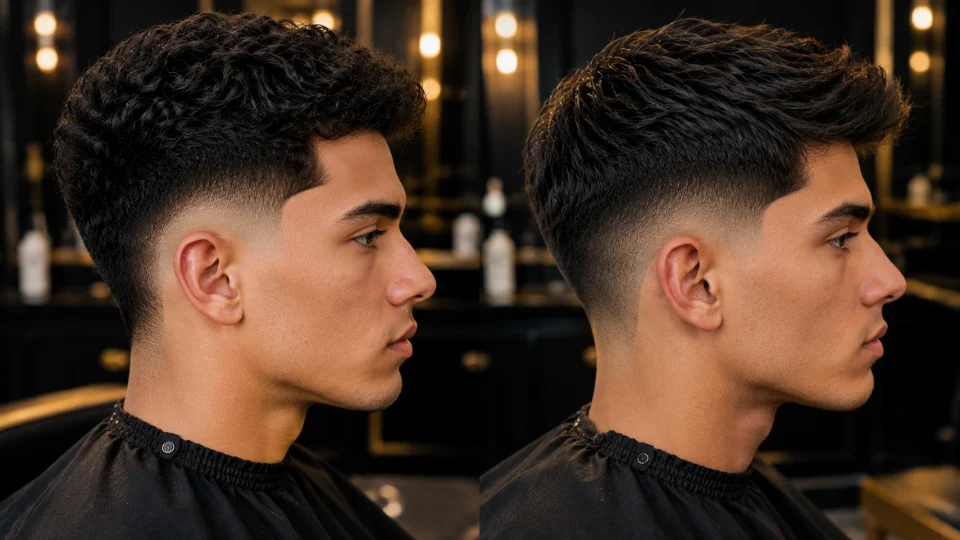
Two photos sit side by side on your phone.
Both haircuts have fades. Both look sharp. You can’t tell them apart at first glance.
Then your barber asks the question that stops most guys cold:
“Burst fade or drop fade?”
You freeze. You nod like you know. You don’t.
Here’s the truth: almost nobody walks into a barbershop knowing the real difference between these two cuts. They just point at a photo and hope for the best.
That’s a mistake, because a burst fade and a drop fade behave completely differently depending on your face shape, your hair type, and how much upkeep you’re willing to do.
By the end of this guide, you’ll know exactly which one fits your face, your hair, and your lifestyle. No guessing. No pointing at random photos. Just a clear answer you can bring straight to your barber.
Burst Fade vs Drop Fade at a Glance
Before we get into the details, here’s the short version.
| Feature | Burst Fade | Drop Fade |
| Fade shape | Curves around the ear in a semi-circle | Drops down and curves behind the ear |
| Fade placement | Concentrated around the ear and temple | Follows the head shape down toward the nape |
| Hair length on top | Works with short to medium length | Works with short to long length |
| Best face shapes | Round, oval, heart | Square, diamond, long |
| Best hair types | Curly, coily, wavy | Straight, thick, fine |
| Maintenance | Every 2–3 weeks | Every 2–4 weeks |
| Styling flexibility | High with texture styles | High with slick styles |
| Professional appearance | Modern, bold | Classic, polished |
| Popular pairings | Mohawk, faux hawk, mullet | Comb over, pompadour, slick back |
| Difficulty for barber | Moderate to advanced | Moderate |
| Best for beginners | Good if barber is experienced | Very good, forgiving shape |
✅ Key Takeaway: If you only remember one thing, remember this, a burst fade curves around the ear, a drop fade curves behind it and follows your skull down the back. Everything else in this guide builds on that single distinction.
What Is a Burst Fade?
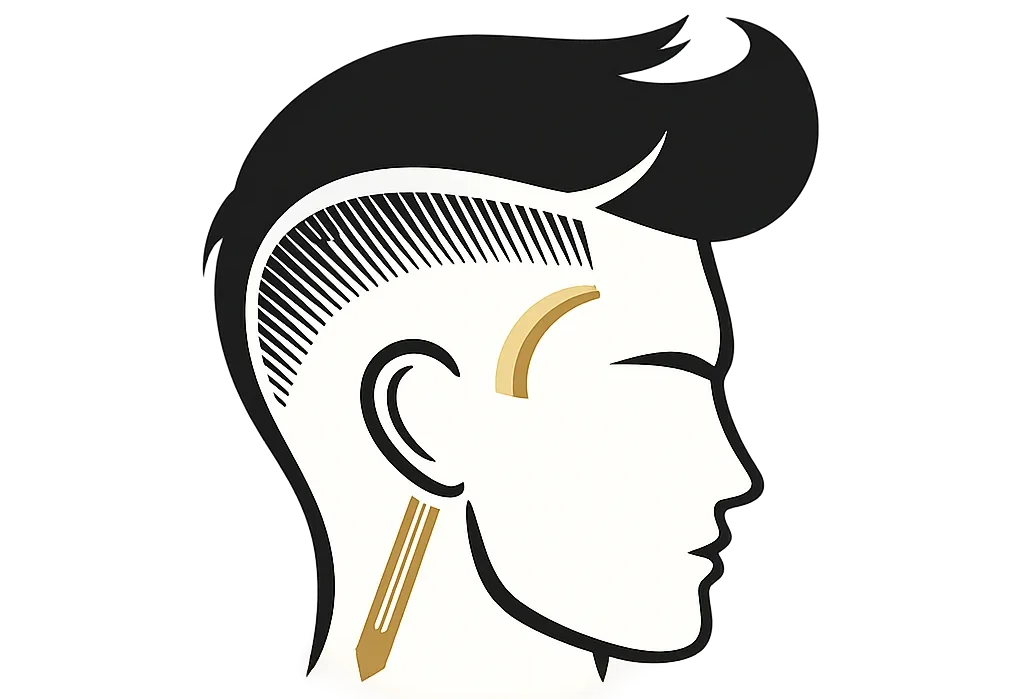
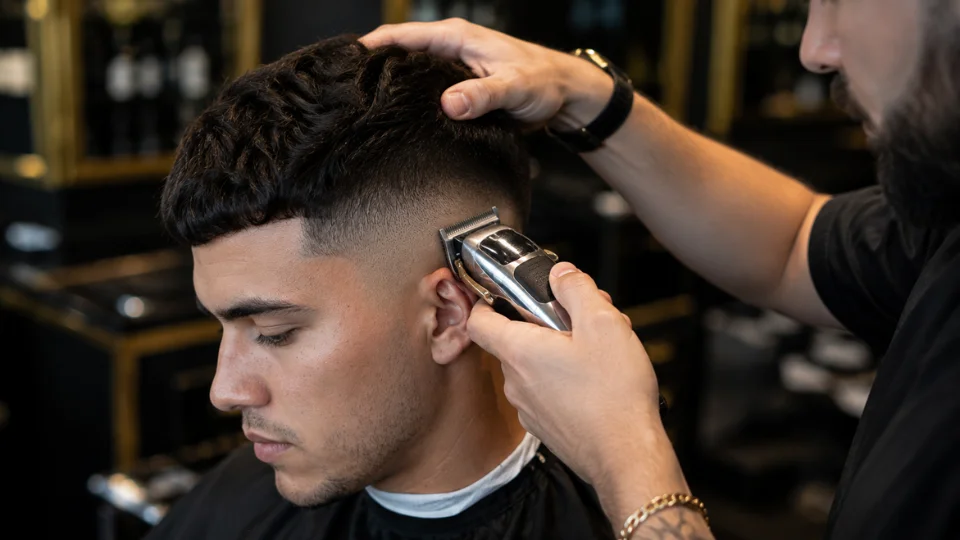
A burst fade is a fade that curves around your ear instead of running in a straight line.
Picture a half-moon shape wrapping around the top of your ear. That’s the “burst.” Instead of a straight fade line across the side of your head, the hair fades in a circular pattern, shortest right around the ear and blending up into longer hair on top.
This shape gives the haircut a rounder, softer transition. It looks less like a straight geometric line and more like the fade is “bursting” outward from a single point — which is exactly where the name comes from.
Barbers love this cut because it works so well with curly and coily hair. The curve of the burst mirrors the natural curl pattern, so the fade blends in without fighting the texture.
It’s also the go-to shape behind some of the most talked-about styles right now, including the burst fade mullet and the curly burst fade. If you want the full breakdown of every version of this cut, our burst fade haircut guide covers every variation from low to high.
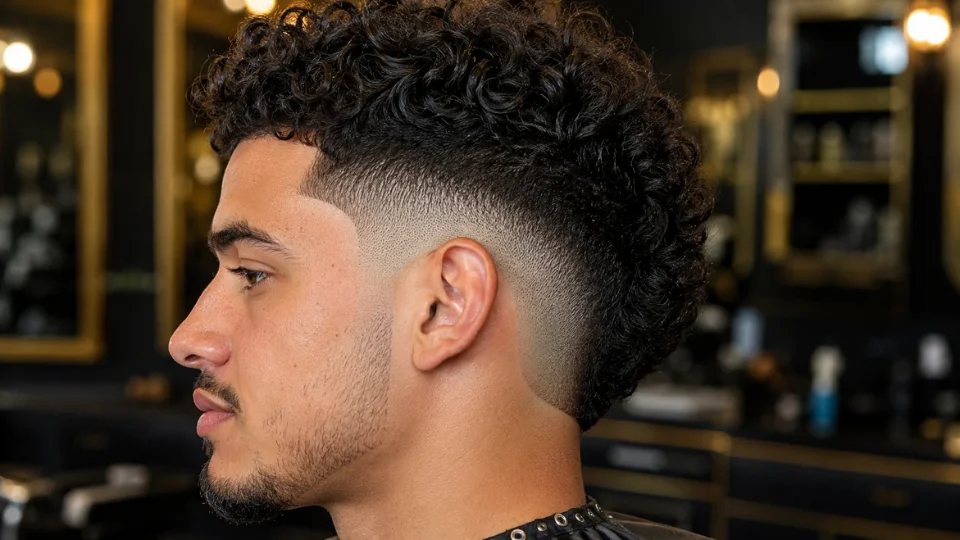
Barber Tip: Ask for a “burst fade around the ear” specifically. Some barbers use “burst” loosely, so being clear about the ear placement gets you the exact shape you want.
Is a Burst Fade a Type of Taper Fade?
This trips up more people than almost anything else in the barbershop, so let’s clear it up.
A taper fade is the umbrella term for any haircut where the hair gradually shortens down toward the skin, no hard lines, just a smooth blend. A burst fade is a specific style of taper that’s cut in a circular pattern around the ear instead of a straight line down the side. So technically, a burst fade is a type of taper fade, but not every taper fade is a burst fade. A standard taper keeps a straight fade line; a burst rounds it off around the ear.
Think of “taper fade” as the category and “burst fade” as one specific member of that category, the same way “sedan” is a category and “Honda Civic” is one model within it.
Key Takeaway
If your barber asks “taper or burst?” they’re really asking whether you want a straight fade line or a curved one around the ear. Both are still fades — the difference is just the shape of the line.
What Is a Drop Fade?
A drop fade does the opposite. Instead of curving around the ear, it drops down behind it.
Picture the fade line starting high near your temple, then curving downward as it moves toward the back of your head, following the natural curve of your skull down to the nape of your neck — the base of your skull where your neck meets your head.
This “drop” creates a longer, smoother line that hugs the shape of your head. It looks clean and structured, which is why it pairs so well with classic styles like a comb over or a pompadour.
Drop fades give barbers more room to work with length on top. Because the fade line runs lower toward the back, you get a longer visual transition, which makes the haircut feel more traditional and put-together.
This is also why drop fades show up so often in professional and corporate settings. The shape reads as polished without looking flashy.
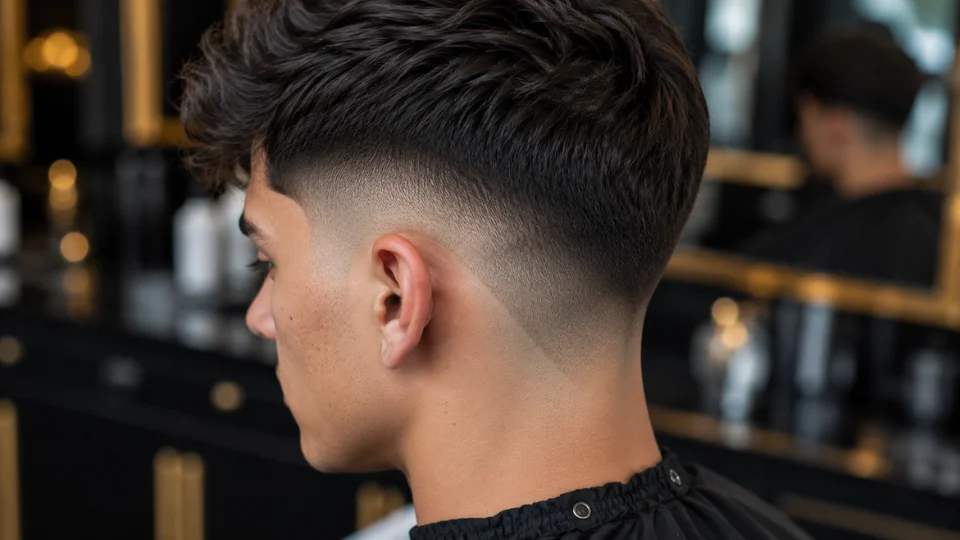
✅ Best For: Guys who want a fade that still looks appropriate for the office, a wedding, or a job interview.
Key Takeaway
A drop fade isn’t a haircut on its own — it’s a fade shape you can apply to almost any style on top, from a low skin fade to a mid fade with more length left in.
Burst Fade vs Drop Fade: Key Differences
Now let’s compare them head to head, feature by feature.
Fade shape. A burst fade curves in a circle around the ear. A drop fade curves downward behind the ear toward the neck.
Back profile. From the back, a burst fade looks rounder and shorter near the ear. A drop fade looks longer, with the fade line stretching lower down the neckline.
Side profile. The burst fade creates a bold, circular pattern near the temple. The drop fade creates a smooth, sweeping curve that follows your skull shape, sometimes referred to by barbers as following the occipital bone — the curved bone at the lower back of your skull.
Neckline. Burst fades usually keep a tighter, rounder neckline. Drop fades often extend the fade further down, giving a cleaner and lower finish.
Contrast. Burst fades tend to show sharper contrast right at the ear, which makes curly textures pop. Drop fades build contrast more gradually along a longer line.
Movement. Burst fades support more texture and movement on top, great for spiky or messy styles. Drop fades support smoother, directional styles like a slick back or comb over.
Texture. Curly and coily hair naturally suits a burst fade because the curve works with the curl pattern. Straight and wavy hair suits a drop fade because it can lie flat along that longer curved line.
Professional appearance. Drop fades generally read as more traditional and workplace-friendly. Burst fades read as more modern and bold.
Maintenance. Both need regular trims, but drop fades can sometimes stretch a few extra days longer between visits since the fade line is less concentrated in one spot.
Growing out. A burst fade grows out into a slightly messier shape around the ear. A drop fade grows out more evenly since the line is longer and less concentrated.
Styling flexibility. Burst fades work great with texture products for a piecey, lived-in look. Drop fades work great with pomade or cream for a smooth, controlled finish.
Visual impact. Burst fades make a bolder first impression. Drop fades make a cleaner, more understated one.
Common Mistake
Don’t confuse either of these with a “low fade” or “high fade.” Those terms describe where the fade starts on your head. Burst and drop describe the shape the fade line takes. You can actually get a low burst fade or a high drop fade, the two sets of terms answer different questions.
Burst Fade vs Drop Fade by Face Shape
This is the part most guides skip, and it’s the part that actually matters most.
Oval Face
Oval faces can wear almost anything, but a drop fade tends to look slightly more balanced because it doesn’t add extra width near the temples. A burst fade also works well if you want a bolder, more textured look.
Verdict: Both work. Choose based on hair type and personal style.
Round Face
A drop fade is usually the better choice here. The longer, lower fade line adds visual length to the face and avoids adding width around the ears, which a round face doesn’t need.
Verdict: Drop fade.
Square Face
A burst fade softens the strong jawline of a square face because the rounded shape around the ear balances out the sharp angles. A drop fade can work too, but the burst does more to soften harsh lines.
Verdict: Burst fade.
Diamond Face
Diamond faces are widest at the cheekbones. A drop fade keeps the sides cleaner and doesn’t add extra bulk near the widest point of the face. A burst fade can work if kept tight and close to the head.
Verdict: Drop fade, with a tight burst fade as a strong second option.
Heart Face
Heart-shaped faces are wider at the forehead and narrower at the chin. A burst fade helps balance this by adding some visual weight lower on the sides, near the jaw.
Verdict: Burst fade.
Long Face
A long face benefits from a fade that doesn’t add extra height. A drop fade, especially a low drop fade, keeps things compact and avoids elongating the face further. Avoid high fades of either style if your face is already long.
Verdict: Low drop fade.
Decision Table by Face Shape
| Face Shape | Recommended Fade | Why |
| Oval | Either | Balanced proportions suit both |
| Round | Drop fade | Adds visual length, avoids width |
| Square | Burst fade | Softens strong jawline |
| Diamond | Drop fade | Keeps sides clean at widest point |
| Heart | Burst fade | Adds balance near jaw |
| Long | Low drop fade | Avoids adding extra height |
✅ Key Takeaway: Notice the pattern, if your face is already angular or wide (square, diamond), a fade that adds structure works against you. If your face is soft or long (round, oval, long), the fade shape can do more of the balancing work for you.
Best Hair Type for Each Fade
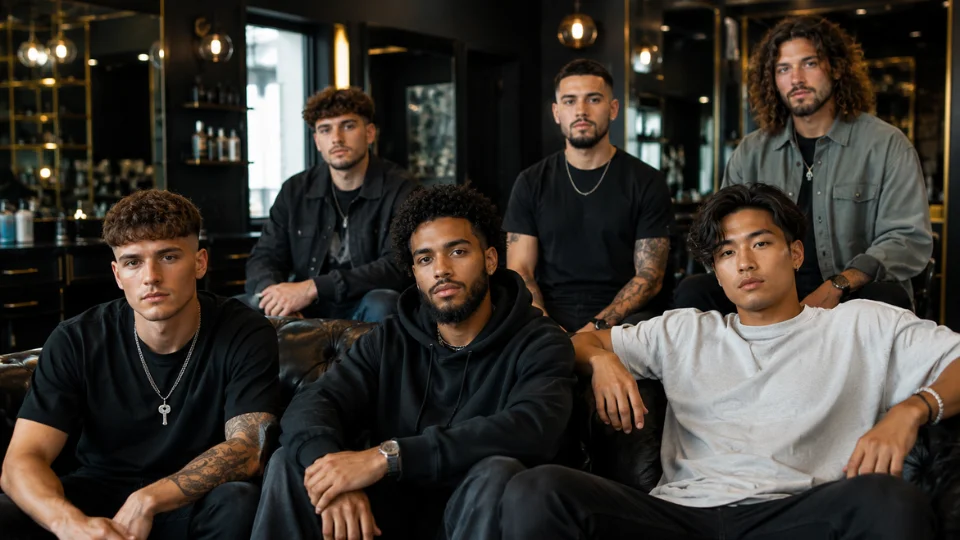
Your face shape matters, but your hair type decides how easy the cut is to maintain day to day.
Straight Hair. Straight hair works beautifully with a drop fade. It lies flat naturally, which makes the longer curved fade line look smooth and controlled without much effort.
Thick Hair. Thick hair suits a drop fade especially well because the extra length gives your barber room to blend and thin it out gradually, avoiding a bulky look on top.
Fine Hair. Fine hair also leans toward the drop fade, since it needs less texture manipulation and styles cleanly with light product.
Curly Hair. Curly hair is where the burst fade shines. The rounded shape around the ear complements natural curl patterns instead of fighting against a straight line. This is exactly why the curly burst fade has become one of the most requested styles at barbershops right now.
Wavy Hair. Wavy hair is flexible and can go either way, but many barbers lean toward a burst fade for wavy hair because it adds a bit more texture and dimension on top.
Healthy hair also fades better, no matter the shape. According to the American Academy of Dermatology, matching your shampoo and conditioner to your specific hair type helps keep strands manageable enough for a barber to work with cleanly.
Common Mistake
Asking for a drop fade with very curly hair can lead to a fade that looks patchy or uneven, because the straighter line doesn’t follow the curl pattern the way a burst does.
Best Hairstyles That Pair With Each Fade
Burst Fade Pairings
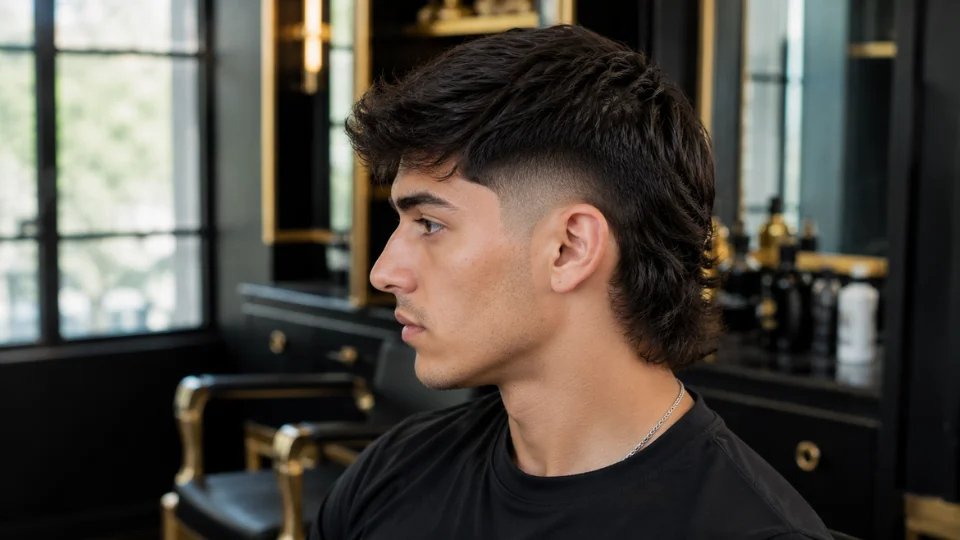
- Burst Fade Mullet. Short and tight around the ear, long and loose in the back. One of the boldest combinations available right now.
- Curly Burst Fade. Let natural curls sit on top while the burst keeps the sides clean and sharp.
- Faux Hawk. The rounded fade frames a raised center strip perfectly.
- Mohawk. A more dramatic version of the faux hawk, with the burst adding shape on both sides.
- Textured Crop. Short, choppy top texture that pairs naturally with the circular fade line.
Drop Fade Pairings
- Comb Over. The longer fade line supports a clean side part and swept-over top.
- Slick Back. A drop fade keeps the sides tight while the top sweeps straight back for a polished look.
- Pompadour. Classic volume on top with a controlled, professional fade underneath.
- Side Part. Sharp and traditional, works especially well for interviews and formal events.
- Quiff. Textured volume at the front with a smooth drop fade supporting the sides.
Pro Styling Advice
A style you’ve seen more of lately is the drop-burst hybrid, a burst curve around the ear that transitions into a lower drop toward the back. It’s a good middle-ground option if you can’t decide, though it takes a more experienced barber to execute cleanly.
Maintenance Comparison
Touch-ups. Burst fades usually need a touch-up every 2 to 3 weeks to keep the rounded line crisp. Drop fades can often stretch to 3 to 4 weeks since the fade is spread across a longer path.
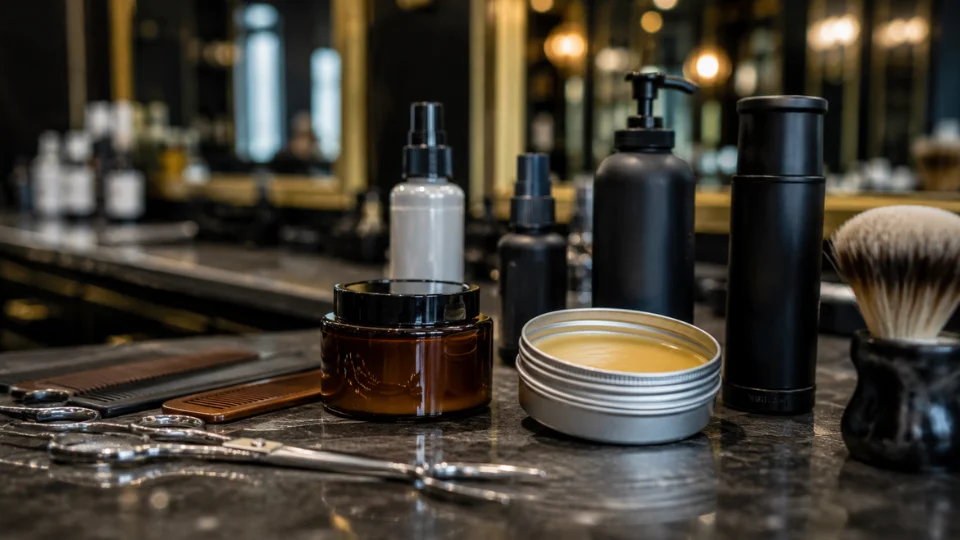
Products. Burst fades pair well with texture powder, clay, or matte paste for that piecey finish. Drop fades pair well with pomade or cream for a smoother, controlled look.
Growing Out. A burst fade grows out unevenly around the ear first, which can look a little rough by week three. A drop fade grows out more gradually and evenly, so it stays presentable longer. For context, scalp hair grows at an average rate of roughly one centimeter per month, according to Cleveland Clinic, which is why any fade — burst or drop — starts to soften and blur after about three weeks.
Barber Visits. Both cuts benefit from returning to the same barber each time. The specific curve of a burst or drop is easier to maintain when your barber already knows your head shape and hairline.
Home Styling. Drop fades are generally easier for beginners to style at home since a comb and pomade go a long way. Burst fades often need a blow dryer or texture spray to get the top looking right.
Daily Routine. Expect about 5 minutes of styling for a drop fade with the right product. Burst fades, especially with curly hair, may take a few extra minutes to define curls or texture properly.
Scalp health. Fades expose more scalp than longer styles, so keeping the scalp itself healthy matters. The AAD recommends washing based on how oily your scalp gets rather than on a fixed schedule, which helps prevent the flaking and irritation that can make a fresh fade look less clean.
Pro Styling Advice
Apply product to damp, not wet, hair. Wet hair dilutes styling cream and reduces hold, especially on drop fades where control matters most.
Pros and Cons
- Softens strong facial features
- Works exceptionally well with curly and coily hair
- Creates a bold, modern look
- Pairs with trend-forward styles like mullets and mohawks
❌ Cons
- Requires more frequent touch-ups
- Grows out less evenly
- Harder to style at home without practice
Drop Fade
- Stretches longer between barber visits
- Easier to style at home
- Reads as more professional and traditional
- Grows out evenly
❌ Cons
- Can add unwanted width on some face shapes
- Less dramatic or bold compared to a burst fade
- Not as flattering for very curly textures
Common Mistakes
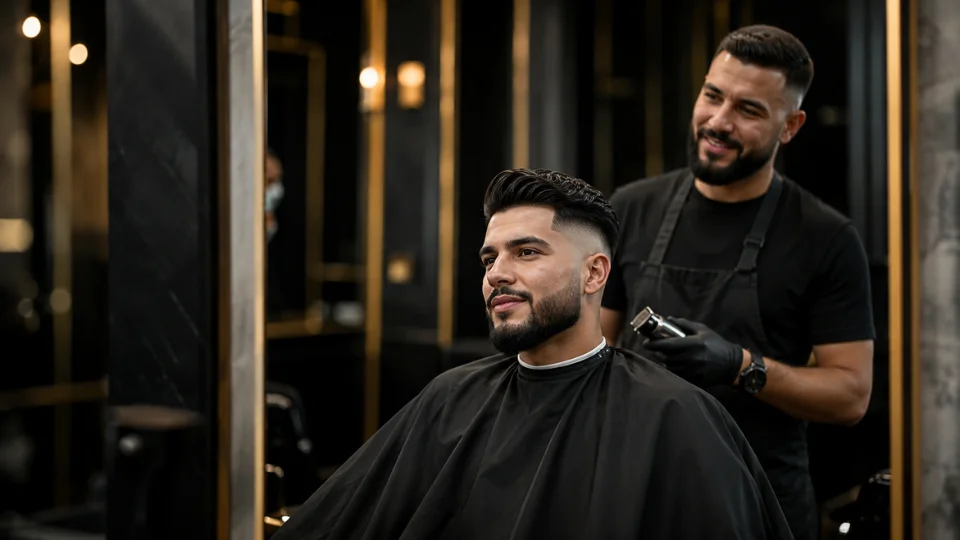
- Mistake 1: Asking for the wrong fade for your hair type. Curly hair with a straight drop fade line can look uneven. Straight hair with an aggressive burst can look choppy. Match the fade to your texture first.
- Mistake 2: Going too high without considering face shape. A high burst or high drop fade can add unwanted height to an already long face.
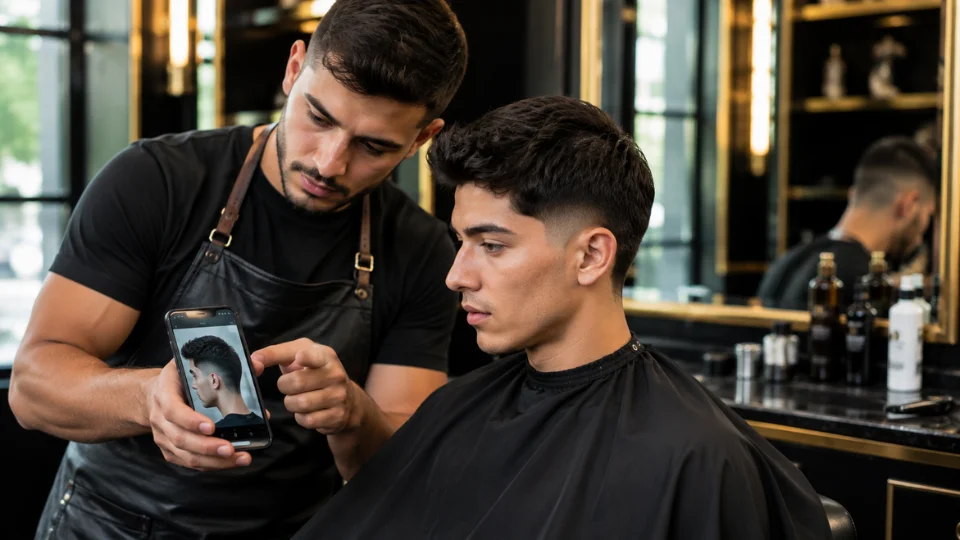
- Mistake 3: Skipping the consultation. Sitting down and just saying “fade me up” leaves too much to chance. Always describe the shape you want, or show a photo.
- Mistake 4: Not accounting for hair growth speed. Guys with fast-growing hair need to book touch-ups more often, especially with a burst fade, or the shape disappears quickly.
- Mistake 5: Copying a photo without considering your own head shape. A style that looks great on someone else may not translate directly to your bone structure. Use photos as a starting point, not a strict blueprint.
- Mistake 6: Mixing up “burst” and “taper” when booking online. If you’re booking through an app or filling out a service list, double-check the exact wording your barbershop uses. Some shops list “burst fade” as an add-on design fee, others include it under standard taper pricing.
How to Ask Your Barber
Getting the exact haircut you want comes down to how clearly you communicate. Here’s how to do it right.
Step 1: Name the fade type. Start with “I want a burst fade” or “I want a drop fade” so your barber knows the base shape immediately.
Step 2: Specify the fade height. Say whether you want it low, mid, or high. This changes how dramatic the contrast looks.
Step 3: Describe the top length. Let your barber know if you want texture, length for styling, or something short and low-maintenance.
Step 4: Mention your face shape concerns. If you’re worried about a round or long face, say so. A good barber will adjust the fade placement to help.
Step 5: Bring a reference photo. A clear photo removes guesswork. Just make sure the model in the photo has a similar hair texture to yours.
Step 6: Ask about maintenance before you leave. Find out exactly how many weeks you have before the fade needs a refresh.
Which One Should You Choose?
Here’s a simple way to decide.
Choose a burst fade if:
- You have curly, coily, or wavy hair
- Your face is square or heart-shaped
- You want a bold, modern look
- You’re open to more frequent barber visits
Choose a drop fade if:
- You have straight, thick, or fine hair
- Your face is round, diamond, or long
- You want a polished, professional look
- You prefer easier at-home styling
If you’re still unsure, ask your barber to explain how each fade would look on your specific head shape before committing. A five-minute conversation saves you from a haircut you’ll regret for weeks.
Frequently Asked Questions
Final Verdict
If you have curly or wavy hair and a square or heart-shaped face, go with a burst fade. It softens sharp angles and works with your natural texture instead of against it.
If you have straight or fine hair and a round, diamond, or long face, go with a drop fade. It’s easier to maintain, stretches longer between visits, and reads as clean and professional.
If your lifestyle demands low maintenance and quick morning styling, lean drop fade. If you want a bolder, more expressive look and don’t mind extra barber visits, lean burst fade.
Either way, the most important step is the conversation with your barber before the clippers come out. Bring a photo, explain your face shape concerns, and ask which version of the fade fits your head shape best.
Recommended Next Reads
Now that you know which fade fits you, here’s where to go next:
- Burst Fade Haircut Guide — the complete breakdown of every burst fade variation, from low to high.
- Burst Fade Mullet — see how the burst fade shape pairs with today’s most requested long-back style.
- Burst Fade Designs — add a line, part, or pattern to your fade for extra personality.
- Comb Over Burst Fade — a hybrid style combining a polished comb over with burst fade sides.
- Burst Fade vs Taper Fade – Discover the key differences to choose the right haircut.
Ready to try one for yourself? Screenshot the face-shape decision table above, save the photo comparisons, and bring them straight to your next barbershop visit — it’s the fastest way to make sure you and your barber are on exactly the same page.
Found this guide useful? Share it with a friend who’s stuck choosing between these two cuts, or save it for your next appointment.
Want more barber-verified breakdowns like this one, plus new burst fade styles as we publish them? Sign up for the BurstFadeBlog newsletter.
About Ryan Carter
Men’s Hairstyle Writer & Grooming Content Specialist
Ryan Carter is a men’s hairstyle writer and grooming content specialist at BurstFadeBlog.com, specializing in burst fade haircuts, fade variations, and modern men’s hairstyles. He researches professional barbering techniques, current hairstyle trends, and trusted grooming resources to create practical, easy-to-follow haircut guides. Ryan regularly reviews and updates his articles to ensure every guide remains accurate, up to date, and genuinely helpful for readers planning their next visit to the barber.
All articles published on BurstFadeBlog.com follow our editorial standards and are reviewed regularly to ensure accuracy, freshness, and reader value.