Burst Fade vs Taper Fade: What’s the Real Difference?
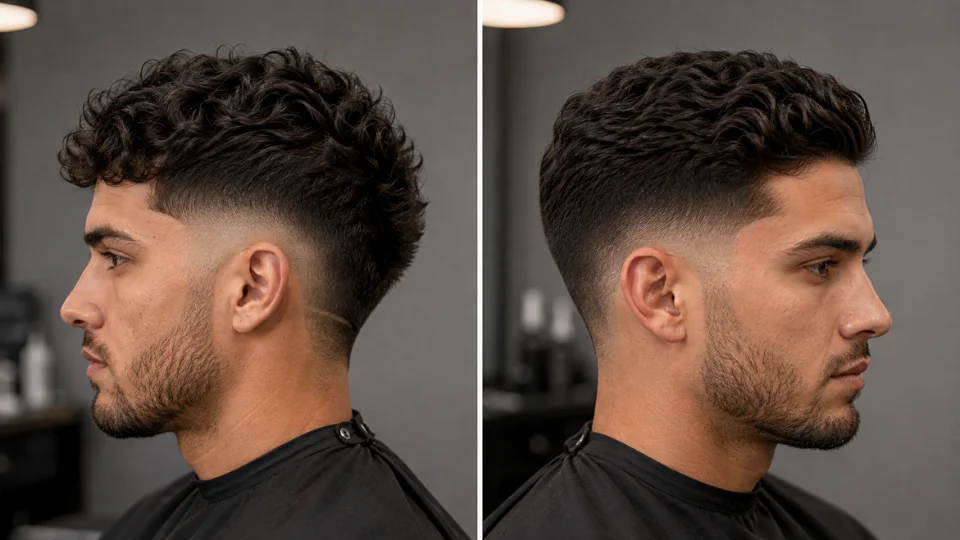
You’re staring at two photos. One says burst fade. The other says taper fade. They kind of look the same. But when it comes to burst fade vs taper fade, the differences matter more than most guys realize. Your barber keeps asking which one you want, and suddenly you don’t know what to say.
You’re not alone. This mix-up happens at barbershops every single day. Guys walk in confident, then freeze the second the barber asks, “Burst or taper?”
Here’s the good news. Once you see how each cut is actually built, the confusion disappears. You’ll know exactly what to say in the chair, and exactly why one of these cuts fits your face shape, hair type, and lifestyle better than the other.
Let’s clear this up for good.
Quick Answer
A burst fade curves around the ear in a half-circle, blending short sides into longer top hair without touching the neckline. A taper fade runs in a straight line down the sides and back, staying close to the neck and ears. Burst fades look bolder and rounder; taper fades look cleaner and more traditional.
What Is a Burst Fade?
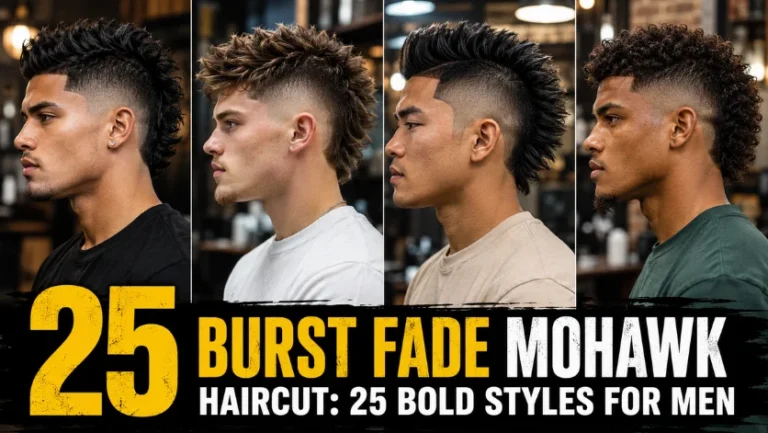
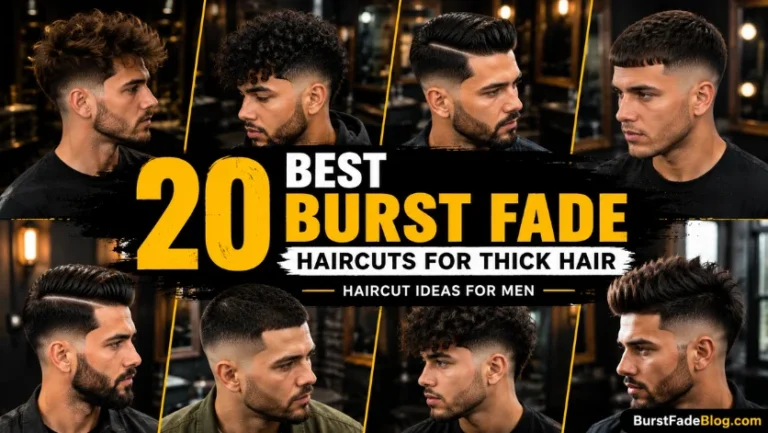
A burst fade is a fade that “bursts” out in a curve around the ear instead of running in a straight line. Picture a half-moon shape wrapping the ear. That curve is what makes a burst fade stand out from every other fade style.
The hair on top usually stays longer, which lets the curve show off more contrast. This is why burst fades are so popular with guys who have mohawks, spikes, or textured tops. The round shape draws the eye upward and gives the whole haircut more energy.
How a Burst Fade Is Cut
The barber starts with clippers set to a very short guard near the ear, then blends upward in a curved motion instead of a straight line. This curve is called the “C-cup” or “burst” section. From there, the fade blends into the longer hair on top.
The neckline and back are usually left alone or trimmed separately. That’s a key detail. A true burst fade focuses on the sides and the area around the ear, not the whole perimeter of the head.
What Makes It Different From a Regular Fade
A regular fade (like a taper) moves in a straight, even line from the bottom to the top. A burst fade breaks that pattern. Instead of following the natural hairline, it curves outward around the ear before joining the rest of the hair.
That curve is the whole point. It’s what gives burst fades their bold, modern look, and it’s the detail most guys forget to mention when they’re trying to describe the cut to a new barber.
Grooming Tip
If you want your burst fade to really pop, ask your barber to leave a little extra length right where the curve meets the top. That small gap creates a sharper, more defined burst line once it’s styled.
What Is a Taper Fade?
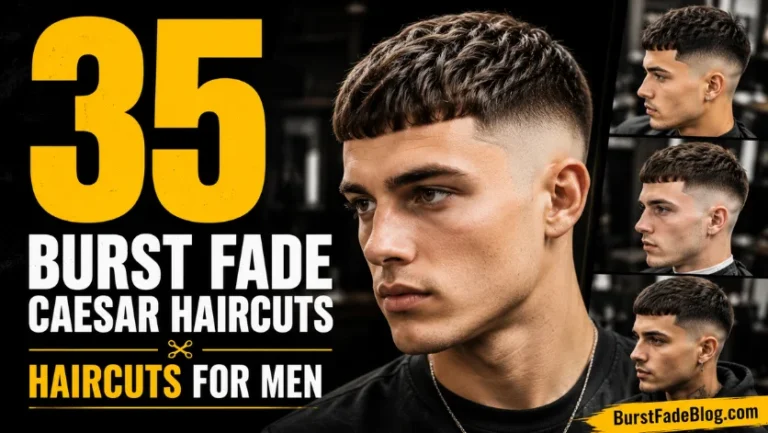
A taper fade is the cut most guys picture when they hear the word “fade.” It’s simple, clean, and it’s been a barbershop staple for decades. The hair gradually gets shorter as it moves down toward the ears and neck, following a straight, even path.
There’s no dramatic curve here. A taper fade sticks close to your natural hairline the whole way around, which is why it reads as more traditional and more office-friendly than a burst fade.
How a Taper Fade Is Cut
The barber blends the hair in a straight vertical line, starting longer near the top and getting shorter down to the skin or a low guard near the neck and sideburns. The sides stay tighter to the head, and the back keeps a clean, straight line at the neckline.
Because the blend follows a predictable line instead of a curve, taper fades are usually faster and a little easier for a new barber to get right.
Common Taper Fade Variations
Not every taper fade looks the same. A low taper keeps most of the fade close to the ears. A mid taper starts higher, around temple level. A high taper pushes the blend even further up the head, closer to a full fade look. Each version changes how bold or subtle the haircut feels.
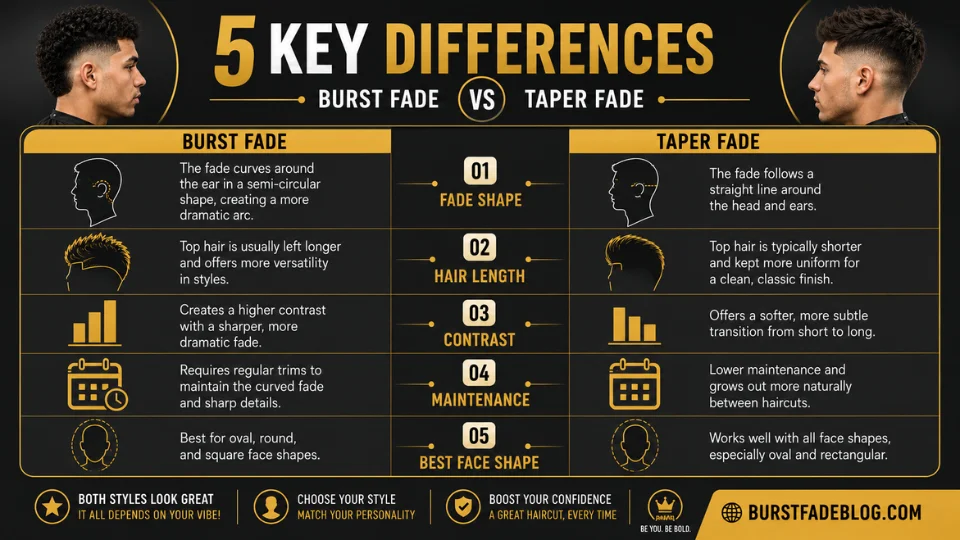
Burst Fade vs Taper Fade: Key Differences
Fade Placement and Shape
This is the biggest difference. A burst fade curves around the ear in a rounded shape. A taper fade runs in a straight line down the side of the head. If you only remember one thing from this article, remember this: curve means burst, straight line means taper.
Hair Length Retained
Burst fades usually keep more length on top, since the rounded shape needs longer hair to really show off. Taper fades can go either way, short and neat, or longer on top for a more textured, modern taper.
Contrast and Boldness
Burst fades tend to create sharper, more noticeable contrast because of that curved line. Taper fades create a smoother, more gradual transition. If you want a haircut that gets noticed, burst leans bolder. If you want something clean and low-key, taper leans quieter.
Side-by-Side Comparison Table
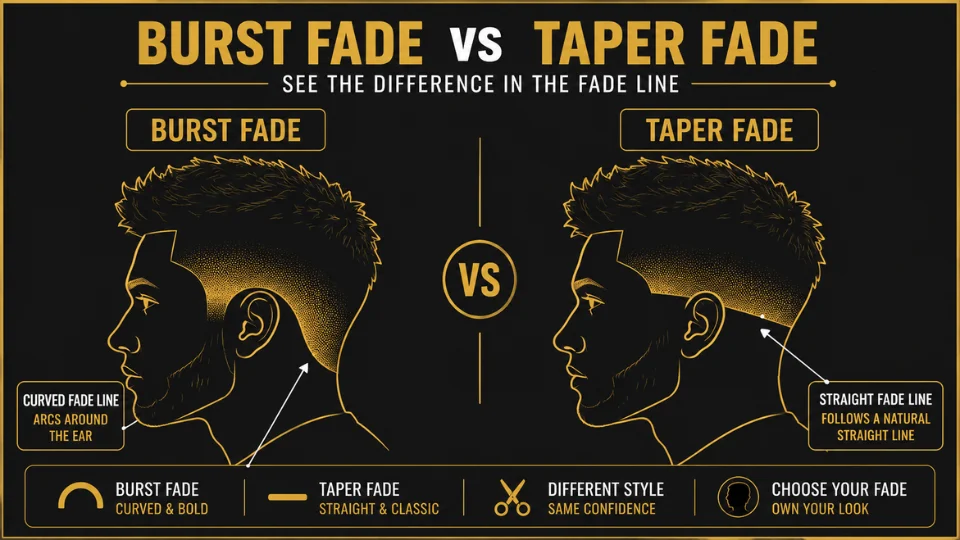
| Feature | Burst Fade | Taper Fade |
| Fade Placement | Curves around the ear | Straight line down the side |
| Shape/Pattern | Rounded “C-cup” burst | Even, gradual taper |
| Hair Length on Top | Usually longer | Short to medium |
| Contrast Level | High | Low to medium |
| Styling Time | 5–10 minutes | 2–5 minutes |
| Best Hair Types | Thick, wavy, curly | Straight, fine, thick |
| Best Face Shapes | Round, oval | Square, oval, heart |
| Professional Suitability | Creative workplaces | Corporate and formal settings |
| Barber Visit Frequency | Every 2–3 weeks | Every 3–4 weeks |
| Difficulty for Barber | Higher (needs precision) | Lower (more forgiving) |
| Best For | Guys who want a bold, modern look | Guys who want a clean, classic look |
Which Haircut Fits Your Face Shape?
Best for Round Faces
Round faces usually look sharper with more height and angles. A burst fade adds that height on top while the curved sides keep things balanced, which helps break up the roundness without looking harsh.
Best for Square or Angular Faces
Square jawlines already have strong angles, so a taper fade works well here. The straight, clean lines of a taper complement a square face instead of adding even more sharp edges.
Best for Oval and Heart-Shaped Faces
Good news if you have an oval or heart-shaped face, both cuts tend to work well. Oval faces are considered the most balanced shape, so a burst fade or a taper fade will both look natural. Heart-shaped faces usually pair nicely with a taper, since the clean sides don’t compete with a narrower chin.
Which Haircut Fits Your Hair Type?
Straight Hair
Straight hair holds a taper fade’s clean lines really well. It lies flat naturally, so the transition looks crisp without much styling effort.
Wavy and Curly Hair
Wavy and curly hair adds natural texture, which pairs beautifully with a burst fade. The extra volume on top plays off the curved sides and creates a fuller, more dynamic shape.
Thick vs Fine Hair
Thick hair can handle either cut and holds shape well throughout the day. Fine hair tends to look better with a taper fade, since there’s less bulk to manage and the cut stays neat with minimal product.
Styling Difficulty and Daily Maintenance
Burst fades need a little more daily attention. Because the top is usually longer and the sides have more visual detail, you’ll likely reach for a comb or texture paste most mornings. Taper fades are lower maintenance day to day, a quick towel-dry and a small amount of product is often enough.
| Task | Burst Fade | Taper Fade |
| Daily Styling Time | 5–10 minutes | 2–5 minutes |
| Product Needed | Paste or clay for texture | Light pomade or none |
| Skill Level to Style | Moderate | Easy |
Grooming Tip
A matte clay works better than a shiny pomade for burst fades. It builds texture instead of flattening the curve, which keeps the burst line looking sharp all day.
Barber Chair Time and Visit Frequency
Burst fades usually need a touch-up every 2 to 3 weeks. The curved line grows out faster than a straight taper because any unevenness is more noticeable. Taper fades can often stretch to 3 or 4 weeks between visits since the straight line grows out more gradually.
If you’re someone who can’t get to the barbershop often, that difference matters. A taper fade is simply easier to maintain on a busy schedule.
Best Age Groups and Professional Settings
Office and Corporate Jobs
If you work somewhere with a formal dress code, a taper fade is usually the safer choice. It reads as clean and professional without drawing too much attention, which fits most corporate environments.
Creative and Casual Workplaces
If your workplace is more relaxed, creative agencies, hospitality, retail, or anywhere self-expression is welcome, a burst fade can be a great way to stand out while still looking sharp and put together.
Trend Score: Which One Is More Popular Right Now
| Style | Trend Score (2026) | Notes |
| Burst Fade | 8.5 / 10 | Rising fast, especially paired with mohawks and textured tops |
| Taper Fade | 9 / 10 | Timeless staple, consistently one of the most requested cuts |
Both cuts are in high demand right now, but for different reasons. The taper fade stays popular because it’s dependable and works in almost any setting. The burst fade is climbing because more guys want a fade with a bit more personality.
Pros and Cons
Every burst fade style has its strengths and trade-offs. Here’s a quick look at the main advantages and potential drawbacks before deciding if it’s the right haircut for you.
Burst Fade Pros and Cons
| Bold, eye-catching shape |
| Great for textured or curly hair |
| Adds height and volume on top |
❌ Cons
| Needs more frequent touch-ups |
| Harder for a new barber to execute well |
| Requires more daily styling |
Taper Fade Pros and Cons
| Low maintenance |
| Works in almost any setting |
| Easier for barbers to execute consistently |
❌ Cons
| Can look plain without extra styling |
| Less dramatic contrast |
| Fewer ways to customize the shape |
How to Ask For Each Cut
This is the part most articles skip, and it’s exactly where guys get tripped up. Here’s exactly what to say in the chair.
To ask for a burst fade, say: “I’d like a burst fade, can you curve the fade around my ear instead of keeping it a straight line? I want to keep some length on top.”
To ask for a taper fade, say: “I’d like a taper fade, keep it a straight, gradual blend down the sides, and keep it close to my ears and neck.”
If you’re not sure which one you want, bring a photo. Even experienced barbers appreciate a reference photo, since “burst” and “taper” can mean slightly different things depending on where you’re getting your hair cut.
Grooming Tip
Always mention your guard number preference too, like “a 1 on the sides, blending into a 4 on top.” Pairing the style name with a guard number removes almost all guesswork for your barber.
Common Mistakes to Avoid
- Asking for a “fade” without specifying burst or taper, which leaves too much up to guesswork.
- Growing your hair out too long between visits, which makes the line harder to maintain.
- Using the wrong product, heavy pomade on a burst fade often flattens the texture that makes it look good.
- Skipping the reference photo, especially at a new barbershop.
- Choosing a style based on trends alone instead of your face shape and hair type.
Frequently Asked Questions
Final Verdict: Which Should You Choose?
There’s no single right answer here, it really comes down to your hair, your face shape, and your lifestyle.
Choose a burst fade if you have wavy or curly hair, want a bolder look, and don’t mind visiting the barbershop a little more often. It’s a great pick for guys in creative or casual work environments who want their haircut to stand out.
Choose a taper fade if you want something clean, classic, and low-maintenance. It works in almost any setting, from job interviews to weddings, and it’s more forgiving if you can’t make it to the barbershop every few weeks.
Both cuts are proven, both look great when done well, and both are worth showing your barber a photo before you sit down. The real win here isn’t picking the “better” haircut — it’s picking the one that fits your life.
About Ryan Carter
Men’s Hairstyle Writer & Grooming Content Specialist
Ryan Carter is a men’s hairstyle writer and grooming content specialist at BurstFadeBlog.com, specializing in burst fade haircuts, fade variations, and modern men’s hairstyles. He researches professional barbering techniques, current hairstyle trends, and trusted grooming resources to create practical, easy-to-follow haircut guides. Ryan regularly reviews and updates his articles to ensure every guide remains accurate, up to date, and genuinely helpful for readers planning their next visit to the barber.
All articles published on BurstFadeBlog.com follow our editorial standards and are reviewed regularly to ensure accuracy, freshness, and reader value.